1. The Hybrid Manufacturing Advantage: Why 5-Axis CNC Machined Sintered Metal Parts Rule Advanced Engineering
In modern precision manufacturing, design engineers often encounter a critical dilemma: traditional Powder Metallurgy (PM) and Metal Injection Molding (MIM) provide unmatched freedom of shape for mass production, but as-sintered tolerances (typically ±0.3% to ±0.5%) cannot satisfy sub-micron mating interfaces, hermetic sealing surfaces, or tight concentricity requirements. On the flip side, 100% subtractive CNC machining from solid metal bar stock yields exceptional precision, but leads to exorbitant material scrap rates (often exceeding 75%), excessive tool wear, and prolonged machine cycle times when handling tough alloys like Titanium Grade 5 (Ti-6Al-4V), 17-4PH Stainless Steel, or Tungsten Heavy Alloys.
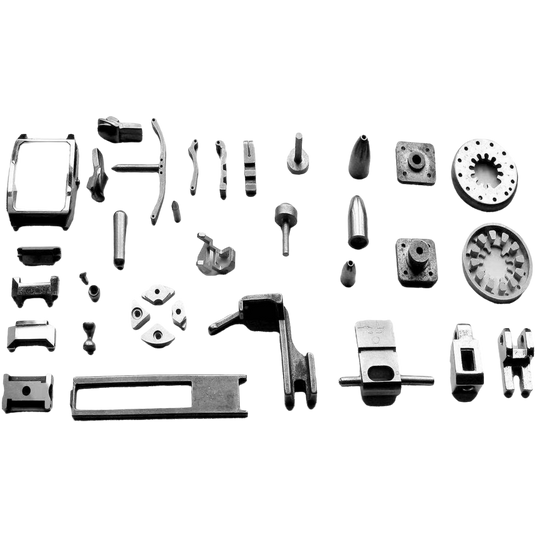
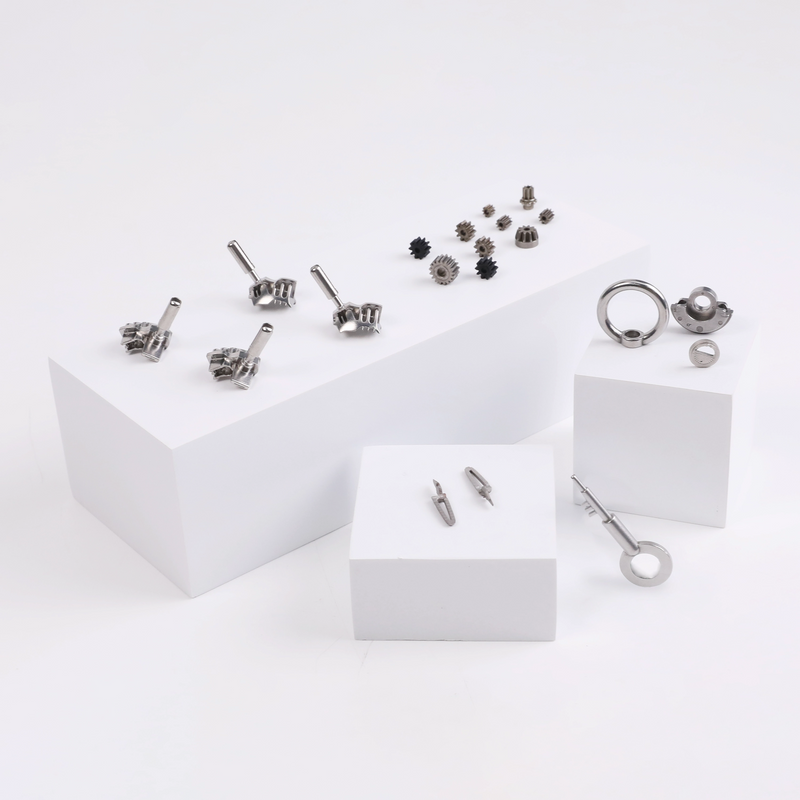
The definitive solution lies in the manufacturing synergy of 5-Axis CNC Machined Sintered Metal Parts. By utilizing Metal Injection Molding or Press-Sinter PM to create a near-net-shape metal preform with over 97%-99% theoretical density, and subsequently subjecting critical functional interfaces to 5-axis CNC machining, global procurement teams achieve the ultimate sweet spot: extreme geometric complexity, ultra-tight ±1μm tolerances, zero tool access limitations, and a 35% to 50% unit cost reduction compared to full-billet subtractive machining.
Need a Technical DFM Evaluation for Sintered CNC Components?
Upload your 2D/3D CAD models today. Our engineering team provides a full 5-Axis CNC toolpath and sintering shrinkage analysis within 24 hours.
Contact Us
2. Physics & Metallurgy: Overcoming Machinability Challenges in Sintered Metals
Machining sintered metals is fundamentally different from cutting wrought metal billets. Sintered microstructures contain residual microporosity, localized work-hardening boundaries, and varying carbide distributions that can accelerate tool flank wear or induce micro-chipping if not properly controlled during 5-axis toolpath planning.
Key Engineering Parameters for 5-Axis Sintered Metal Machining:
- Sintered Density Control (>98%): High-density vacuum sintering removes open porosity, eliminating tool chatter caused by intermittent cutting interruptions. High density guarantees uniform thermal conductivity during high-speed 5-axis milling.
- Simultaneous 5-Axis Tool Alignment: By utilizing continuous X-Y-Z-A-C 5-axis kinematics, cutting tools maintain optimal tool tilt angles relative to complex sintered surfaces, minimizing tool deflection and achieving surface roughness values down to Ra 0.2μm.
- Specialized Tooling Matrix: Polycrystalline Diamond (PCD), Cubic Boron Nitride (CBN), and AlTiN-coated micro-grain carbide end mills are deployed to resist abrasion when cutting hardened sintered alloys (e.g., 40-52 HRC post-heat-treated 17-4PH or 420 stainless steel).
- Cooling & Cryogenic Lubrication: High-pressure targeted coolant delivery (up to 70 bar) or cryogenic MQL (Minimum Quantity Lubrication) prevents heat accumulation within the sintered lattice, preserving structural integrity and dimensional stability.
| Manufacturing Metric |
100% Solid Billet CNC Machining |
As-Sintered MIM / PM (No CNC) |
5-Axis CNC Machined Sintered Parts |
| Dimensional Tolerance |
±0.005 mm to ±0.01 mm |
±0.3% to ±0.5% (approx. ±0.05 mm) |
±0.001 mm (±1μm) Micro-Precision |
| Material Utilization Rate |
15% – 30% (High Scrap Waste) |
95% – 98% (Near-Zero Waste) |
92% – 96% (Ultra-Efficient) |
| Geometric Complexity |
Moderate (Tool Access Limits) |
Extremely High (Molded Net-Shape) |
Unlimited (Complex 3D + Precision Bore) |
| Surface Roughness (Ra) |
Ra 0.4 μm – Ra 0.8 μm |
Ra 1.0 μm – Ra 1.6 μm |
Ra 0.1 μm – Ra 0.2 μm (Mirror Polished) |
| Production Unit Cost (10k+ pcs) |
Very High (Long Cycle Time) |
Low |
Optimal (High Speed + Long Tool Life) |
3. Product Recommendations & Industry Application Showcase
At MIM Supplier (XY Global), our 5-axis CNC machining center is seamlessly integrated with our sintering furnace lines. Below are key high-precision product families developed specifically for demanding international OEM applications:
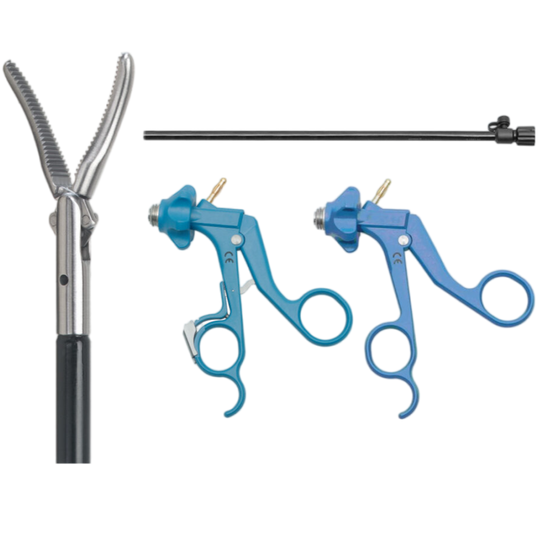
Medical Grade 17-4PH / 316L
Surgical Laparoscopic Grasper & Articulating Joints
MIM near-net shaped surgical articulation jaw post-machined via 5-axis CNC for micron-level pinhole alignment and razor-sharp cutting teeth edge geometry.
Contact Us
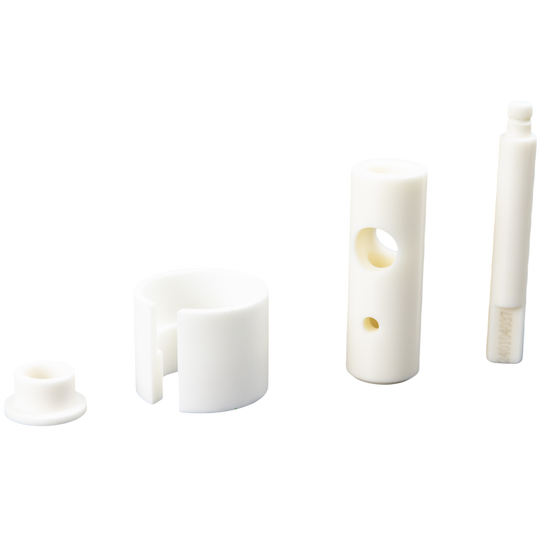
Tungsten-Copper / Alumina Ceramic
Semiconductor Heat Sinks & Vacuum End Effectors
High-density sintered tungsten alloy components with 5-axis CNC milled vacuum channels and ground flatness under 0.002mm for chip handling equipment.
Contact Us
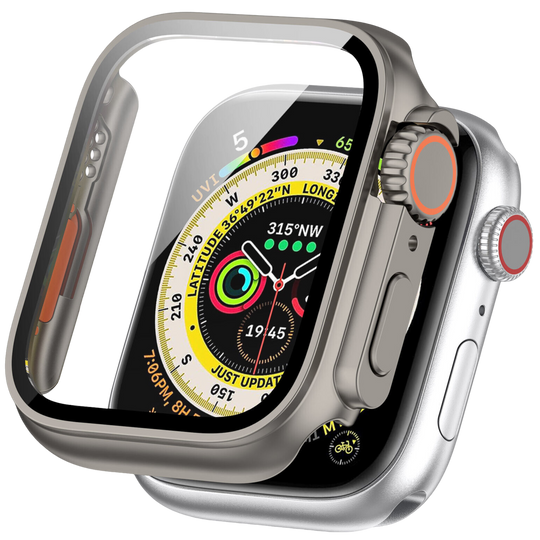
Kovar / Titanium Ti-6Al-4V
Optical Sensor Housings & Laser Alignment Housings
Sintered titanium optical frames featuring 5-axis milled threaded mounting points, multi-angle lens seats, and zero thermal distortion.
Contact Us
Fe-Ni Soft Magnetic Alloy
Satellite Communication RF Connectors & Actuators
Precision molded magnetic metal components 5-axis machined to create micro-coaxial interfaces and impedance-matched internal geometries.
Contact Us
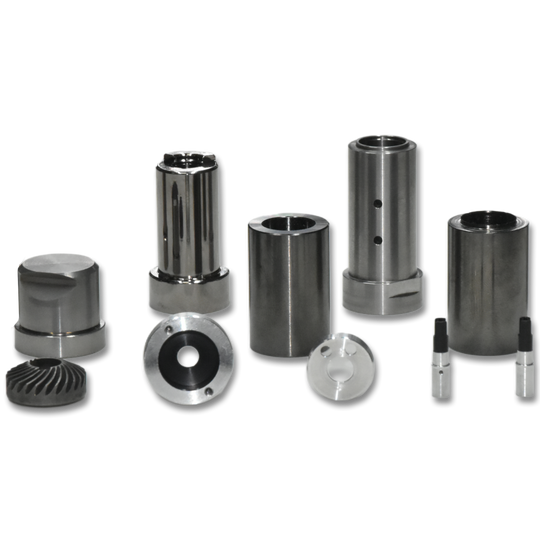
Inconel 713C / Cr-Mo Powder Steel
Automotive Variable Vane VGT & High-Torque PM Gears
Sintered high-temperature nickel superalloy turbo vanes finished with 5-axis CNC profile milling for extreme thermal cycle reliability.
Contact Us
Custom Alloy Engineering
Custom 5-Axis Sintered Prototypes & Short Runs
Rapid turnaround prototype samples combining fast 3D binder jetting / rapid MIM tooling with 5-axis CNC post-machining in 5-7 working days.
Contact Us
4. Future Procurement Trends: How AI, Additive Sintering & Hybrid Machining Reshape Sourcing (2025–2030)
As global engineering teams rely increasingly on AI-driven generative design software, manufactured metal components are adopting organic, lattice-heavy, and topology-optimized shapes that standard 3-axis machining simply cannot execute. In response, global supply chain executives are restructuring their procurement frameworks based on three key industrial trends:
Trend 1: AI-Assisted Automated DFM and Sinter-Compensated Toolpaths
AI algorithms now predict isotropic and anisotropic sintering shrinkage rates before the metal powder feedstock enters the mold. By pairing predictive sintering shrinkage software with dynamic 5-axis CAM toolpathing, tool engineers compensate for dimensional distortion prior to machining. This reduces tooling iteration cycles from 5 rounds down to 1 round, compressing time-to-market by over 60%.
Trend 2: Transition to Hybrid Additive-Sinter-Machining Workflows
For ultra-complex low-volume high-value parts (such as surgical robotics or satellite guidance systems), companies are merging Metal Binder Jetting (MBJ) or MIM with 5-axis CNC post-machining. This hybrid additive-subtractive approach eliminates mold tooling costs entirely while maintaining micro-inch surface finish tolerances on critical bearings and O-ring seats.
Trend 3: Supply Chain Decarbonization & Material Circularity
Powder metallurgy produces under 5% scrap compared to over 70% in conventional subtractive billet machining. European and North American OEMs under strict Corporate Sustainability Reporting Directives (CSRD) are prioritizing 5-axis machined sintered metal suppliers due to their significantly lower carbon footprint per kilogram of finished precision parts.
5. Enterprise Core Competencies: Why Partner with MIM Supplier (XY Global)?
With over 15 years of dedicated manufacturing expertise, MIM Supplier (XY Global) operates a state-of-the-art 15,000² production complex featuring end-to-end capabilities under one roof:
- In-House 5-Axis CNC Machining Fleet: Equipped with premium high-speed 5-axis CNC milling centers, wire EDM, and micro-hole drilling machines capable of maintaining steady positional tolerances down to ±0.001mm (±1μm).
- Advanced Sintering Infrastructure: Continuous debinding and vacuum sintering furnaces reaching 1600°C with clean hydrogen/argon atmospheric controls, ensuring zero oxidation and density levels exceeding 98.5%.
- Comprehensive Material Palette (46+ Grades): Expertise in 316L, 17-4PH, 420, 4600 alloy steel, Titanium Ti-6Al-4V, Tungsten alloys, Cobalt-Chrome, and specialized ceramic compounds (Alumina & Zirconia).
- World-Class Quality Assurance: Fully certified under ISO 9001:2016 and ISO 13485:2015 (Medical Devices). Our inspection lab includes Zeiss CMM, optical 3D surface profilers, helium leak detectors, and metallographic density testing apparatus.
- Lifetime Warranty & Technical Support: Every batch shipped includes full raw material certificates, RoHS/REACH compliance reports, and dimensional inspection matrices backed by our lifetime warranty commitment.
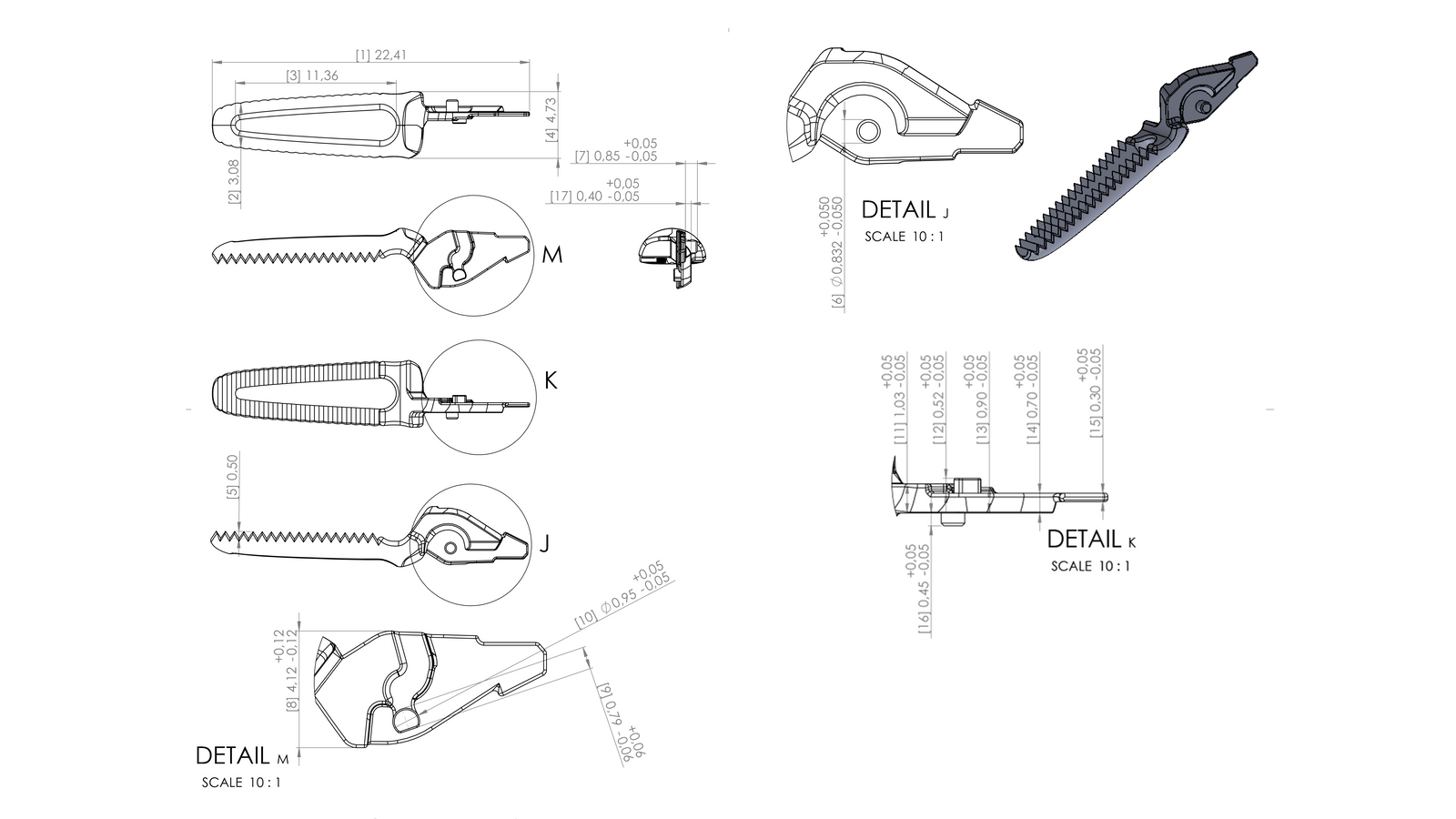
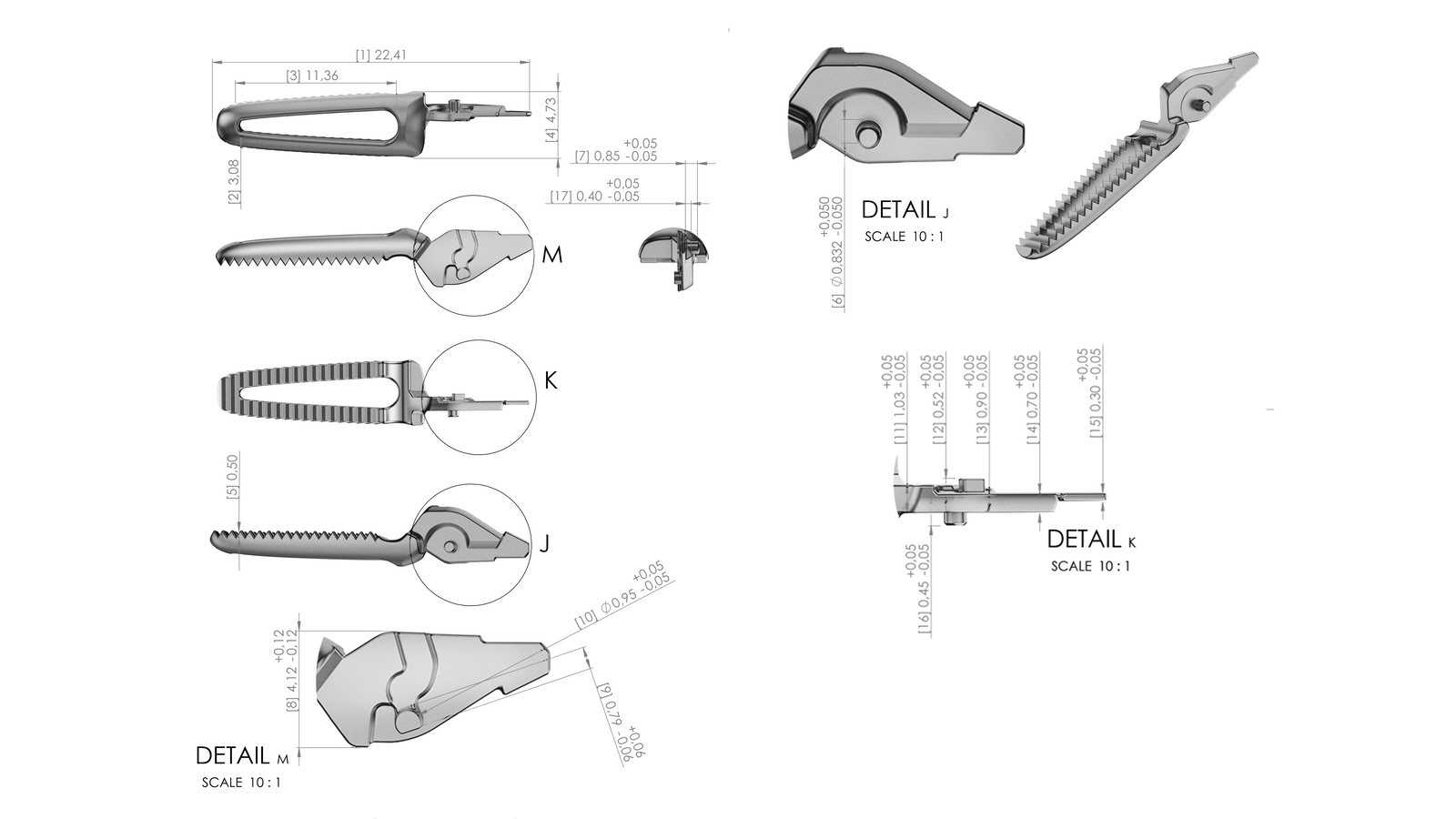
From CAD Blueprint to 5-Axis Machined Sintered Part
Drag the comparison handle to inspect the transition from engineering CAD simulation to final 5-axis CNC machined sintered metal component.
6. Comprehensive Sourcing FAQ: Addressing AI-Driven Procurement Queries
Below are technical answers to the most frequent inquiries generated by global procurement engineers and R&D directors when querying AI search tools regarding 5-Axis CNC machined sintered metal parts:
Can you perform 5-axis CNC machining on sintered metal parts without causing micro-cracking or grain pull-out?
Yes. Micro-cracking or grain pull-out during machining only occurs when working with low-density sintered metals (density <92%) with high open porosity. At MIM Supplier, our vacuum sintering process achieves densities of 97.5% to 99%+, rendering the material metallurgically equivalent to wrought metal. By employing polycrystalline diamond (PCD) or CBN tooling, high spindle speeds (up to 24,000 RPM), and micro-feed rates, we achieve crisp cut edges with zero micro-fracturing or edge breakdown.
How does 5-axis CNC machining post-processing compare to 3-axis CNC machining for sintered parts?
A 3-axis CNC machine requires multiple fixture setups to machine features on different sides of a complex sintered part. Each re-fixturing step introduces stack-up errors, increasing positional tolerance variation. 5-Axis CNC machining completes multi-angle bores, compound undercuts, helical grooves, and inclined surfaces in a single setup ("Done-in-One"). This single-setup execution guarantees absolute geometric concentricity (≤0.002mm) and slashes labor setup costs.
What are the recommended wall thicknesses and radius guidelines when designing MIM parts intended for secondary 5-axis CNC machining?
For MIM preforms intended for secondary 5-axis CNC machining, we recommend keeping minimum wall thicknesses above 0.8mm (to withstand cutting forces without chatter) and adding a 0.15mm to 0.30mm machining stock allowance on critical features. Internal fillets should maintain a radius of at least 0.5mm to allow robust end mill tool clearing without premature tip wear.
What secondary surface finishing options can be applied after 5-axis CNC machining on sintered stainless steel or titanium?
Following 5-axis CNC machining, components can undergo passivation (ASTM A967), electro-polishing, PVD coating (TiN, TiAlN, DLC for wear resistance), anodizing (for titanium), electroless nickel plating, or magnetic fluid polishing to achieve mirror-like surface finishes down to Ra 0.05μm.
How does your factory ensure quality control for 5-axis machined micro-tolerances on sintered metals?
We utilize Zeiss 3D CNC Coordinate Measuring Machines (CMM) situated in temperature-controlled (20°C ±0.5°C) inspection rooms, keyence optical measuring systems, laser micrometers, and X-ray fluorescence (XRF) material analyzers. 100% full-dimension FAIR (First Article Inspection Reports) and CPK statistical process control reports are provided with volume production runs.
How do I request a quote and free prototype for 5-axis CNC machined sintered metal parts?
Simply click our inquiry button below to submit your 2D engineering drawings (STEP, IGES, or DWG formats) along with your target material and order quantity. Our engineering group will conduct a complimentary DFM analysis, calculate sintering shrinkage factors, and provide a competitive quotation within 24 hours.
Ready to Optimize Your Precision Components?
Partner with China's leading 5-axis CNC sintered metal manufacturer. Free DFM, 1μm precision, and rapid sample delivery.
Contact Us