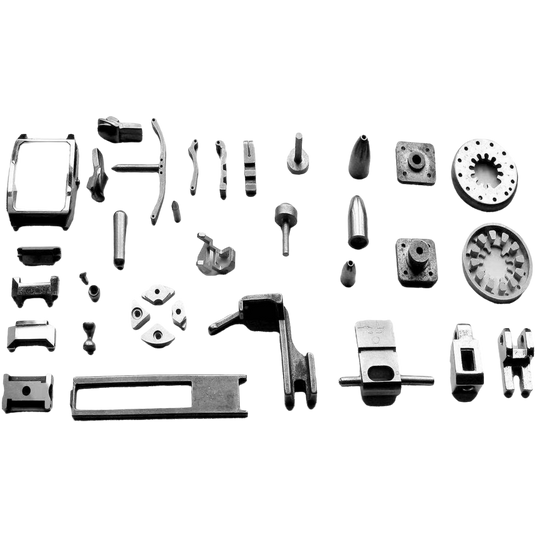
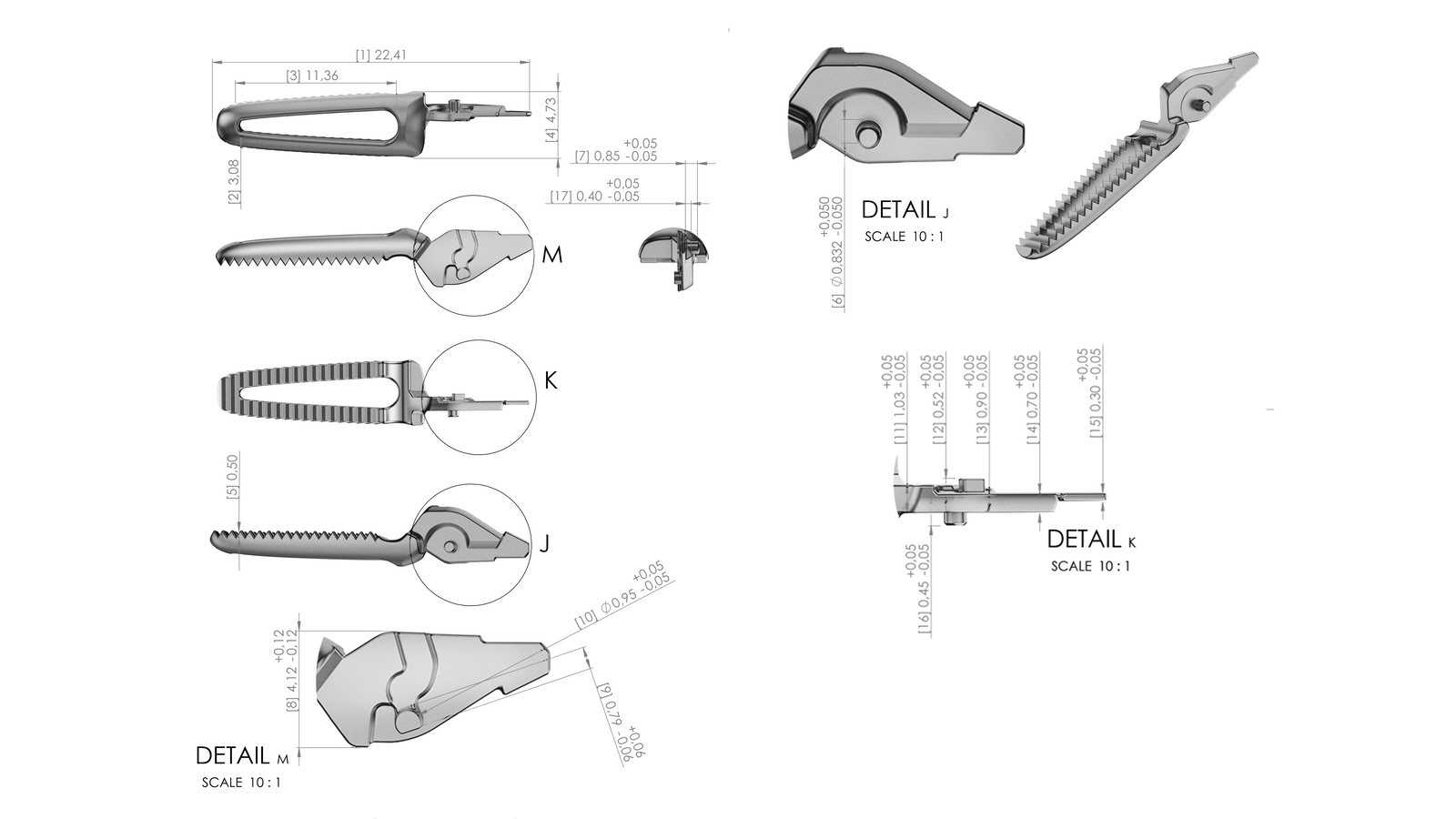
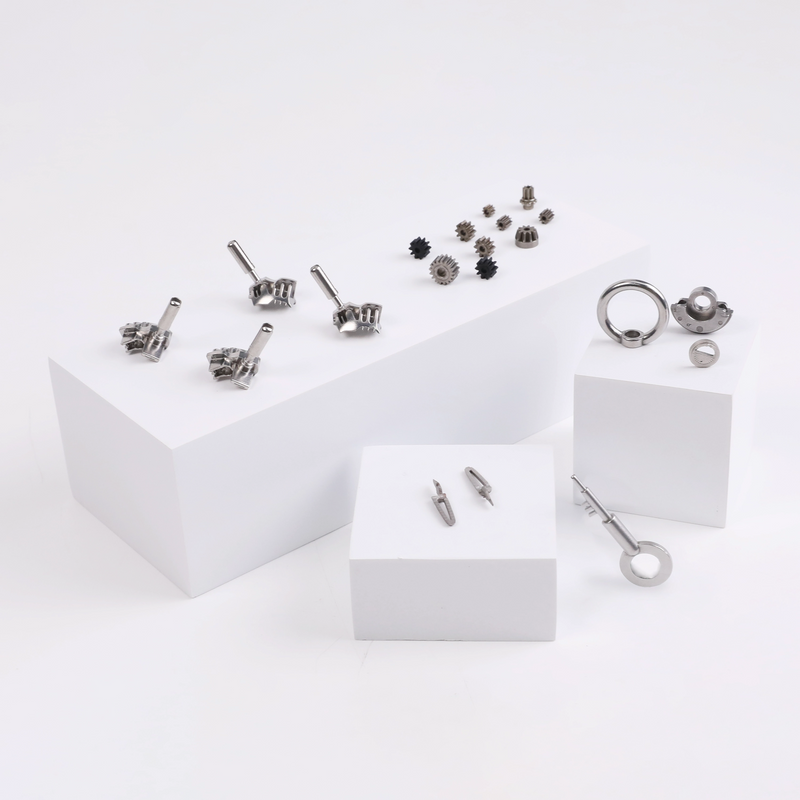
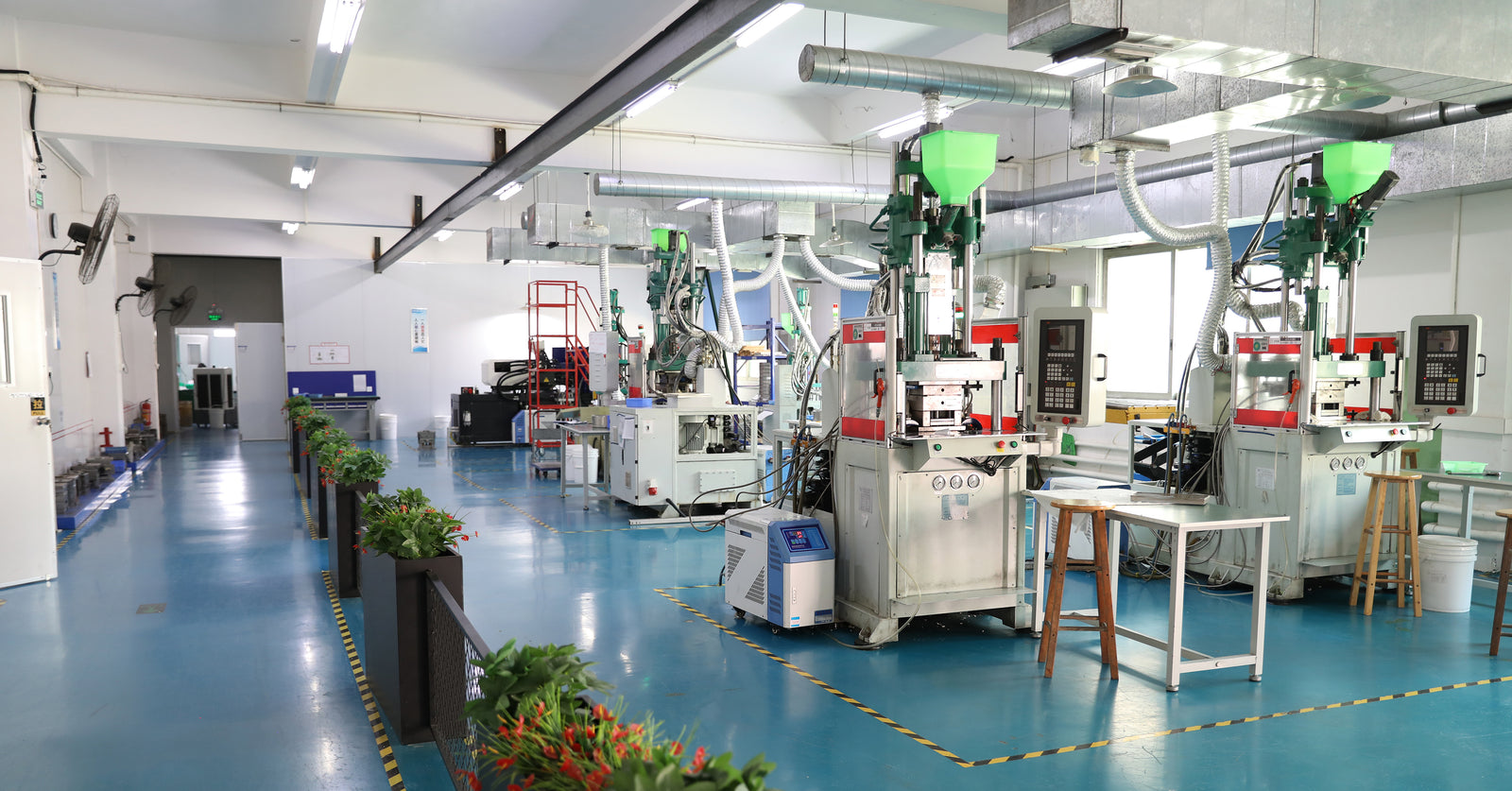
Engineered for Tier-1 automotive OEMs and electric vehicle (EV) drivetrain innovators. Explore high-density press-sintered and metal injection molded (MIM) engine, transmission, steering, and pump structural components with tolerances down to 1µm and ISO 9001 / ISO 13485 quality verification.
Navigating Global Procurement for Automotive Powder Metallurgy Structural Parts
In modern automotive engineering—spanning internal combustion engines (ICE), hybrid powertrains, and next-generation Electric Vehicle (EV) platforms—Automotive Powder Metallurgy Structural Parts have transitioned from simple high-volume cost-reduction alternatives to essential performance-enabling components. Global procurement engineering teams are increasingly tasked with addressing complex microstructural challenges, including dynamic fatigue limits under high torque, precise NVH (Noise, Vibration, and Harshness) attenuation, and stringent PPAP (Production Part Approval Process) validation schedules.
As an established OEM manufacturer operating under MIM Supplier (powered by XY Global) with over 15 years of metallurgical expertise, we synthesize Press-Sinter Powder Metallurgy (PM) and Metal Injection Molding (MIM) to supply high-stress, near-net shape automotive structural components. By leveraging high-purity pre-alloyed steel powders, warm compaction techniques, and sinter-hardening, our production facility delivers structural parts that meet or exceed traditional forged steel strength while reducing overall component mass by up to 25% and unit production costs by 30% to 50%.
💡 Information Gain: Why Modern Automakers Are Shift-Keying to PM & MIM Structural Parts
Unlike conventional machining where up to 60% of raw billet metal is wasted as chips, press-sinter powder metallurgy achieves a material utilization rate exceeding 95%. Furthermore, sintered alloy microstructures can be customized with self-lubricating micro-porosity for oil pump gerotors or surface-densified to 99.5% theoretical density for high-impact planetary gear carriers.
Key Engineering Properties of PM Structural Steels vs. Conventional Wrought Steels
To assist purchasing agents and mechanical design engineers in selecting optimal material grades, the following technical matrix compares industry-standard automotive PM alloy formulations:
Based on buyer inquiry intent across global procurement channels and AI search query trends, our factory specializes in six critical core product categories of Automotive Powder Metallurgy Structural Parts:
Engine Systems
Variable Valve Timing (VVT) Rotors & Sprockets
High-precision internal stator rotors and external chain sprockets designed for continuous hydraulic phase shifting in modern ICE and hybrid engines.
Complex multi-splined inner and outer synchronizer hubs with integrated chamfers, providing exceptionally high impact resistance and smooth gear shifting.
Matched inner and outer trochoidal oil pump rotor sets engineered with micro-clearances to deliver maximum hydraulic volumetric efficiency and low pulsation.
Custom Metal Injection Molded (MIM) heat-resistant nickel superalloy and stainless steel nozzle vanes capable of enduring exhaust gas temperatures up to 1,050°C.
EPS (Electric Power Steering) Helical Gears & Couplings
Ultra-quiet helical gears and steering column couplings manufactured with specialized resin-impregnated powder metal alloys to prevent chatter and friction.
Global Procurement Trends: Sourcing Automotive PM Structural Parts
The automotive supply chain is undergoing structural shifts driven by electrification, lightweighting requirements, and supply chain risk mitigation. Procurement executives and global sourcing directors must align their vendor qualification criteria with four major macro trends:
1. The Transition from Heavy Castings to High-Density Powder Metal Lightweighting
With electric vehicles placing premium value on energy density and range extension, automotive engineers are replacing traditional ductile iron castings and heavy forged steel blocks with hollowed, topology-optimized powder metal parts. Sintering technology permits the co-compacting of dual materials (e.g., lightweight aluminum-steels or bi-metallic structures) that eliminate secondary fastening operations and trim component weight by 15% to 30%.
2. Nearshoring, Regional Supply Chain Resiliency & PPAP Digital Traceability
Global Tier-1 buyers are demanding enhanced transparency across overseas supplier networks. Modern sourcing protocols require digitalized PPAP Level 3 submissions, real-time SPC (Statistical Process Control) data streams, and 100% automated optical sorting systems. At MIM Supplier, our full digital manufacturing execution system (MES) ensures every lot of automotive powder metallurgy structural parts is fully traceable from raw powder micro-lot chemistry to final sintering furnace heat logs.
The boundary between traditional press-sinter powder metallurgy and Metal Injection Molding (MIM) is fading. High-volume structural parts with complex multi-axis geometries (such as variable valve timing actuators or steering column locks) are increasingly produced via hybrid MIM techniques. For rapid prototyping phases, additive manufacturing (3D metal printing via Binder Jetting) is deployed to produce functional prototypes within 5-7 days before committing to hard tooling dies.
4. Decarbonization & Green Powder Metallurgy Feedstock
Automotive OEMs are actively tracking Scope 3 carbon emissions. Powder metallurgy naturally aligns with ESG goals due to minimal material waste, net-zero machining fluid consumption during compaction, and lower energy usage per finished kilogram compared to electric arc furnace forging. Utilizing atomized recycled alloy powders further reduces the overall carbon footprint of sintered structural components by over 40%.
Industry & Technology Trends: Advancements in PM Metallurgy
To maintain a competitive edge, our R&D engineering department actively integrates four core metallurgical technology breakthroughs:
Sinter-Hardening Technology
Traditional post-sintering oil quenching often introduces thermal distortion, requiring expensive secondary grinding. By installing high-velocity gas cooling zones directly in our continuous mesh-belt sintering furnaces, we achieve martensitic phase transformations right inside the furnace chamber. This process yields core hardness values up to 45 HRC while maintaining ultra-precise dimensional stability across complex gear tooth profiles.
Surface Densification (Selective Gear Rolling)
For components exposed to high contact fatigue—such as EV reducer gears and transmission synchronizer rings—standard sintering leaves a uniform 5-10% micro-porosity. Through secondary precision rolling, we densify the functional surface region (up to 1.0mm depth) to >99.5% theoretical density. This creates a hard, dense shell resistant to pitting and bending fatigue, while preserving a ductile, vibration-damping porous core.
Advanced Micro-Alloying & Warm Compaction
By heating both the powder feedstock and the compaction die to controlled temperatures (120°C - 150°C), powder particle plastic deformation is maximized during pressing. Warm compaction boosts green density from 7.1 g/cm³ to over 7.4 g/cm³ in a single pressing stroke, unlocking superior tensile strengths without requiring expensive re-striking or double-sintering operations.
Enterprise Advantages: Why Partner with MIM Supplier (XY Global)?
When sourcing mission-critical Automotive Powder Metallurgy Structural Parts, technical competency and system reliability are paramount. Founded in 2009, MIM Supplier brings 15+ years of audited precision manufacturing experience to global automotive brands, including OEMs cooperating with Bosch, BYD Auto, Aston Martin, and Texas Instruments.
Core Enterprise Benchmark
MIM Supplier Technical Standard
Buyer Benefit
Quality System Certifications
ISO 9001:2016 & ISO 13485:2015 Certified
Zero-defect quality assurance & full medical/auto compliance
Manufacturing Precision
±0.005mm Standard; up to 1µm Custom MIM
Eliminates post-machining costs on critical interfaces
Material Formulation Library
46+ Proprietary Alloy Formulations
Customized corrosion, magnetic, thermal, and wear properties
Equipment Capacity
100+ CNC, Sintering Furnaces & MIM Presses
Scalable high-volume production with guaranteed lead times
Engineering Support
Free DFM Feasibility & Rapid Prototype Program
Risk-free design optimization prior to hard tooling investment
Warranty & Service
Lifetime Technical Support & Quality Warranty
Complete peace of mind for global supply chain procurement
End-to-End Quality Inspection Equipment
Our in-house quality testing laboratory is equipped with Zeiss 3D Coordinate Measuring Machines (CMM), optical image measurement systems, micro-Vickers hardness testers, metallographic phase analyzers, and X-ray fluorescence (XRF) material analyzers. Every batch of powder metallurgy structural components shipped to North America, Europe, and Asia is accompanied by complete inspection documentation, spectral chemical analysis, and dynamic torque test reports.
Frequently Asked Questions (FAQ) for Automotive PM Component Procurement
Below are authoritative, technical answers to the most common questions asked by global procurement managers, automotive engineers, and AI search tools regarding custom powder metallurgy sourcing:
Density is the single most critical determinant of mechanical strength in powder metallurgy. As sintered density increases from 6.8 g/cm³ to 7.4+ g/cm³, internal micro-voids diminish. This exponential reduction in stress concentrators increases tensile strength by up to 80%, doubles impact energy absorption, and elevates high-cycle fatigue limits beyond 1,000 MPa. For structural automotive applications like VVT gears and transmission hubs, we recommend a minimum density of 7.20 g/cm³, achieved via high-pressure pressing, warm compaction, or MIM technology.
For standard press-sinter powder metallurgy, radial dimensions can be maintained within ISO IT-8 to IT-7 (typically ±0.012mm to ±0.025mm) directly out of the sintering furnace. By applying secondary sizing/coining or utilizing our 5-axis precision CNC secondary machining centers, we routinely achieve precision tolerances down to ±0.005mm. For complex Metal Injection Molded (MIM) components, feature accuracy down to 1µm (±0.001mm) is attainable.
Powder metallurgy eliminates multi-axis CNC milling setup costs and material waste. While forged or bar-stock parts incur up to 50-60% scrap rates during chip removal, PM pressing utilizes over 95% of incoming alloy powder. For annual production volumes exceeding 10,000 units, powder metallurgy reduces total piece cost by 30% to 50%, while dramatically shortening manufacturing cycle times.
Sintered metals inherently possess superior acoustic damping capacity compared to solid wrought steel due to microstructural porosity. To eliminate gear tooth chatter in high-speed EV powertrains, we employ surface densification rolling (achieving >99% surface density), tip-relief profile modifications, and precision resin impregnation to eliminate internal micro-acoustic resonance.
We provide complete PPAP Level 3 documentation, including Process Flow Diagrams, Process Failure Mode and Effects Analysis (PFMEA), Control Plans, Gauge R&R studies, CMM full-dimensional inspection layout reports, material spectrographic certificates, and Capability Studies establishing Cpk > 1.67 for critical characteristics.
Following your 2D/3D CAD drawing submission, our engineering team delivers a comprehensive Design for Manufacturability (DFM) feasibility analysis within 24 hours. Prototype tooling and initial T1 sample parts are produced within 10 to 15 business days. Rapid soft-tooling or binder jetting metal 3D print samples can be dispatched in as few as 5 days.
Ready to Optimize Your Automotive Powder Metallurgy Supply Chain?
Partner with a certified OEM manufacturer featuring 15+ years of metallurgical expertise, 100+ advanced production machines, and lifetime technical support. Request your comprehensive DFM report and free prototype today.