
MIM & CIM Technical Insights & Engineering Articles
Industry knowledge, DFM guidelines, material selection whitepapers, and precision powder metallurgy case studies from MIM Supplier.
Precision Ceramic & Metal Molding Innovations
Deep dive into micro-molding tolerances, debinding-sintering processes, and high-purity ceramic solutions for global OEMs.
Design for Manufacturability Best Practices
Practical engineering insights on optimizing part geometries, reducing tooling costs, and achieving 1µm tolerances.
China Top 316L Stainless Steel MIM Components Supplier?
Choosing a China-based supplier for 316L Stainless Steel MIM Components requires more than comparing unit prices. It demands evidence, process discipline, and clear technical communication. A capable manufacturer should control powder preparation, feedstock mixing, injection molding, catalytic or thermal debinding, and vacuum sintering. Each stage leaves a trace. Warped edges, visible cracks, or inconsistent density often reveal weak control.
Dr. Randall M. German, a respected powder-injection-molding researcher, has emphasized, “The powder controls the process.” This principle remains highly practical. Fine 316L powder can improve surface detail, but it may also increase binder demand and molding sensitivity. A reliable supplier should explain these trade-offs plainly. Ask for material certificates, dimensional inspection reports, density data, corrosion testing, and representative production samples. Do not rely on polished photographs alone.
Experience matters here.
The best China supplier is not automatically the largest factory. It is the partner that understands your geometry, tolerance limits, service conditions, and annual volume. Technical discussions should include gate design, sintering shrinkage, post-processing, and critical measurement points. Small details matter. A 0.02-millimeter deviation can affect assembly performance.
Still, no supplier evaluation is perfect. Samples may not represent long-term production. Published capabilities can also sound broader than actual experience. Therefore, request a controlled trial order and compare results against approved drawings. A careful review of quality records, communication speed, and corrective actions will reveal more than a sales presentation. This guide examines those practical signals when identifying a dependable China supplier for 316L Stainless Steel MIM Components.
What Is 316L Stainless Steel MIM?
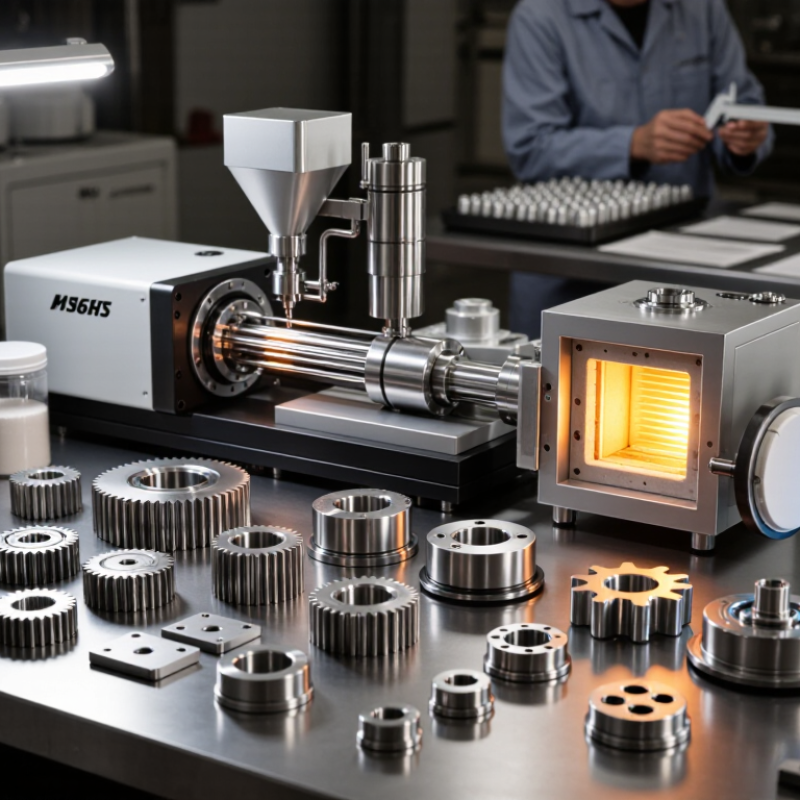
316L stainless steel MIM combines fine metal powder with a temporary polymer binder. The mixture becomes a feedstock for injection molding. It flows into a precision tool, forming a detailed “green part.” Thin ribs, small holes, and curved surfaces are possible.
The binder is removed through controlled thermal or solvent steps. A fragile “brown part” remains. Sintering then heats the component below its melting point. Powder particles bond, while the part shrinks, often by 15–20%. This shrinkage must be measured during tool design. Guesswork creates expensive dimensional problems.
316L contains chromium, nickel, and molybdenum. Its low carbon content supports corrosion resistance after proper processing. It suits compact components used around moisture, mild chemicals, and demanding mechanical assemblies. Actual performance depends on density, surface condition, heat treatment, and design stress.
Quality control should include powder traceability, feedstock consistency, debinding records, sintering profiles, and dimensional inspection. Density and microstructure testing can reveal incomplete sintering or hidden porosity. Experienced production teams also compare first-article measurements with the digital drawing.
MIM is not a perfect shortcut. Complex geometry can reduce machining, but poor gate placement may cause warpage. I have seen small changes in binder content affect filling and surface quality. A reliable supplier should explain these risks, provide inspection data, and verify 316L chemistry instead of making broad claims.
Why Choose a China-Based 316L MIM Components Supplier?
China offers a strong manufacturing base for 316L stainless steel metal injection molding. Experienced suppliers can manage tooling, feedstock preparation, molding, debinding, and vacuum sintering in one coordinated process. This reduces handoffs and can shorten development time for small, complex components. I have seen practical benefits in parts with thin walls, fine knurling, and tight dimensional requirements. Local access to tooling engineers also makes design changes faster. Sometimes, one afternoon of discussion prevents weeks of rework.
A capable China-based supplier should provide material certificates, dimensional reports, and traceable production records. ISO 9001 certification can support process control, but certification alone proves little. Ask for sample data from similar 316L MIM parts. Check density, surface finish, shrinkage control, and corrosion performance. The lowest quotation may hide weak inspection or unstable sintering. That is worth questioning. Clear drawings, realistic tolerances, and agreed sampling standards improve reliability. However, not every supplier has equal technical depth, and supplier evaluation still requires careful review.
How Are 316L Stainless Steel MIM Components Manufactured?
Manufacturing begins with fine 316L stainless steel powder and a carefully measured polymer binder. The powder provides corrosion resistance and mechanical strength. The binder gives the mixture enough flow for injection molding. Precise mixing is essential. Poor dispersion can create weak zones inside the final component.
The heated feedstock enters a steel mold under controlled pressure. It fills small cavities, ribs, holes, and curved surfaces. After cooling, the molded part is called a green component. It is fragile but already close to its final shape. Operators then remove most of the binder through solvent or thermal debinding. The remaining polymer supports the powder particles during handling.
Sintering takes place in a controlled atmosphere furnace. The temperature rises gradually, allowing the particles to bond without severe distortion. The component usually shrinks during this stage, often by around 15 to 20 percent. Tooling design must predict this change accurately. Even minor errors can affect holes, flatness, and assembly fit. Inspection may include dimensional measurement, density testing, surface checks, and microscopic review. Critical parts may require additional passivation or surface finishing. The process is efficient, but not effortless. Powder variation, trapped binder, or uneven heating can still cause defects. Experienced manufacturers adjust molding pressure, debinding time, and furnace profiles from real production data, not assumptions. Consistency matters most.
What Quality Standards Should Suppliers Meet?
For a China-based 316L stainless steel MIM supplier, quality begins with measurable specifications, not a polished catalog. Ask for powder lot traceability, binder records, and furnace charts. ISO 9001 certification supports process control, but it does not prove component performance. Suppliers should test density, tensile strength, elongation, hardness, dimensions, and corrosion resistance. MPIF material data tables commonly report 316L MIM densities above 7.5 g/cm³, tensile strength near 480 MPa, and elongation around 40%. Actual results vary with powder, debinding, and sintering. That variation matters.
Use ASTM B883 requirements where applicable, and request test methods with every report. ISO 22068:2022 offers another useful framework for injection-moulded metallic materials. A reliable supplier should retain samples, calibrate gauges, and provide Cpk data for critical dimensions. In practice, inspect first-article parts under magnification, then compare density results through an independent laboratory. A certificate alone is not evidence. It can hide gaps. Even experienced teams sometimes accept attractive numbers without checking specimen geometry, test direction, or lot identity.
Tips: Request material certificates, furnace temperature profiles, and dimensional inspection reports. Confirm chromium, nickel, and molybdenum levels in the 316L chemistry. Require a pilot run before mass production. Do not treat ISO 9001 as a substitute for metallurgical testing. One overlooked shrinkage zone can ruin an otherwise precise component.
How to Evaluate and Select the Right China MIM Supplier?
China Top 316L Stainless Steel MIM Components Supplier?
How to Evaluate and Select the Right China MIM Supplier?
China’s MIM market offers broad capacity, but supplier selection needs evidence. Fortune Business Insights valued the global MIM market at about US$4.1 billion in 2023. Its report forecasts a 7.3% CAGR through 2032. Grand View Research reports a different growth rate, near 8.5%. Forecasts are not identical. That matters when judging capacity claims.
Request material certificates, feedstock lot records, and sintering charts for 316L parts. Confirm density, carbon content, corrosion performance, and dimensional stability. Typical 316L MIM density reaches approximately 7.5–7.6 g/cm³ after sintering. Ask for actual inspection data. Brochure averages can mislead.
Audit the supplier’s tooling control, debinding equipment, furnace uniformity, and corrective-action process. ISO 9001 certification helps, but it cannot replace process evidence. Check Cpk results on critical dimensions, not only final inspection reports. Review sample parts under magnification. Look for burrs, weld lines, distortion, and inconsistent surface texture.
Start with a controlled pilot order. Keep the geometry realistic. A supplier may pass simple coupons but struggle with thin walls and hidden channels. No supplier is perfect. I would record weaknesses openly, then measure improvement. Also verify traceability, production capacity, packaging controls, and export documentation before approving mass production.
China Top 316L Stainless Steel MIM Components Supplier? – How to Evaluate and Select the Right China MIM Supplier?
| Evaluation Category | Key Metric | Practical Benchmark for 316L MIM | Why It Matters | Recommended Verification Evidence | Priority | Suggested Weight |
|---|---|---|---|---|---|---|
| Material Capability | 316L stainless steel powder and feedstock | Documented 316L feedstock specification with controlled powder loading and lot traceability | Material consistency affects shrinkage, density, corrosion resistance, and mechanical performance. | Material certificate, powder or feedstock batch records, certificate of analysis, and incoming inspection procedure | Essential | 15% |
| Dimensional Performance | Dimensional tolerance after molding, debinding, and sintering | Tolerance should be defined by drawing and feature size; approximately ±0.3% is a common initial MIM design reference, with tighter tolerances requiring secondary processing | MIM parts experience material shrinkage during sintering, so process capability must be demonstrated on actual geometry. | First article inspection report, capability study, Cpk data where applicable, and measurement-system records | Essential | 15% |
| Density and Porosity | Sintered density and internal porosity | Typically above 95% of theoretical density for well-controlled 316L MIM; the purchase specification should state the required minimum | Higher density generally supports better strength, corrosion resistance, fatigue performance, and surface quality. | Density test results, metallographic cross-sections, pore analysis, and lot-based inspection records | Essential | 12% |
| Mechanical Properties | Tensile strength, yield strength, and elongation | Typical 316L MIM values can be approximately 450–650 MPa tensile strength and 25–50% elongation, depending on processing and applicable specification | Mechanical requirements must match the component's load, impact, wear, and service-temperature conditions. | Independent or qualified laboratory test report using agreed test standards and representative production samples | Essential | 12% |
| Corrosion Resistance | Corrosion resistance of sintered 316L | The supplier should demonstrate performance against the actual environment; chloride exposure, passivation, and surface condition must be considered | 316L contains molybdenum, but corrosion resistance can be reduced by contamination, inadequate sintering, or unsuitable finishing. | Corrosion-test report, chemical composition certificate, passivation record, and surface-treatment specification | Essential | 10% |
| Process Control | Control of molding, catalytic or solvent debinding, and sintering | Documented process windows for molding temperature, debinding conditions, sintering temperature, atmosphere, and cycle time | Small changes in debinding and sintering can cause distortion, cracking, residual carbon, or inconsistent density. | Process flow chart, control plan, furnace records, parameter history, and nonconformance procedure | Essential | 12% |
| Tooling and Design Support | Mold design, shrinkage compensation, and DFM review | Formal DFM review covering wall thickness, draft, ribs, holes, gates, ejection, distortion risk, and sintering support | Early design review reduces tooling changes, molding defects, and dimensional problems during scale-up. | DFM report, mold-flow or filling analysis where needed, tool drawing, revision history, and sample approval record | Recommended | 10% |
| Surface Finish | As-sintered and secondary-finished surface quality | As-sintered surfaces are commonly around Ra 1–3 µm; tighter roughness values may require tumbling, blasting, polishing, or machining | Surface finish influences appearance, sealing, friction, cleanability, and corrosion behavior. | Surface-roughness measurements, approved limit samples, visual inspection standard, and finishing-process records | Recommended | 6% |
| Quality Management | Quality system and inspection discipline | A documented quality management system with controlled drawings, inspection plans, calibration, traceability, and corrective action | Systematic controls are more reliable than final inspection alone, especially for high-volume production. | Quality certificate, internal audit summary, calibration records, inspection reports, and corrective-action examples | Essential | 8% |
| Production Capacity | Equipment, capacity, and scalability | Capacity should be demonstrated using available molding machines, debinding systems, sintering furnaces, and inspection resources | A supplier may produce prototypes successfully but struggle with repeatability, cycle time, or delivery at volume. | Equipment list, monthly capacity estimate, production-loading plan, pilot-run results, and capacity expansion plan | Recommended | 5% |
| Validation and Sampling | Prototype, pilot run, and production approval process | Use a staged approval process: DFM review, prototype samples, pilot batch, dimensional validation, performance testing, and production release | Staged validation identifies shrinkage, warpage, surface, and assembly issues before mass production. | Sample approval plan, inspection report, control samples, deviation list, and signed production-release documentation | Essential | 3% |
| Commercial and Delivery Risk | Lead time, tooling ownership, communication, and total cost | Compare total landed cost, tooling terms, quoted lead time, minimum order quantity, packaging, logistics, and contingency plans | The lowest unit price may not provide the lowest total cost if quality problems, delays, or repeated tooling changes occur. | Detailed quotation, milestone schedule, tooling agreement, quality agreement, packaging specification, and delivery performance data | Recommended | 2% |
| Supplier Selection Rule | Weighted evaluation score | Shortlist suppliers that meet all essential requirements and achieve at least 80/100 in the weighted assessment | A weighted model prevents price from outweighing material, process, quality, and validation risks. | Completed supplier scorecard, comparison of objective evidence, sample evaluation, and documented approval decision | Verify | Overall |
FAQS
It combines fine stainless steel powder with a temporary polymer binder. The mixture flows into a precision mold. It forms detailed green parts.
MIM can create thin ribs, small holes, curved surfaces, and compact internal features. These shapes may require extensive machining otherwise. Small details matter.
The binder is removed through controlled thermal or solvent debinding. A fragile brown part remains. It needs careful handling.
Sintering bonds powder particles below their melting point. The part commonly shrinks by 15–20 percent. Tooling must compensate accurately.
316L contains chromium, nickel, and molybdenum. Its low carbon content supports corrosion resistance after proper processing. Performance still depends on density and surface condition.
Quality checks can include powder traceability, feedstock testing, and debinding records. Sintering profiles and digital drawing comparisons are also important. Inspection cannot be skipped.
Poor powder dispersion may create weak internal zones. Uneven heating can cause distortion or incomplete sintering. Poor gate placement may produce warpage.
No. MIM can reduce machining for complex, repeated parts. However, tooling, shrinkage, and process control add risks. It is not a magic shortcut.
The team should provide inspection data and verify the material chemistry. It should explain shrinkage, porosity, and surface risks clearly. Broad promises are not enough.
Conclusion
This article explains what 316L Stainless Steel MIM Components are and why they are widely used for applications requiring corrosion resistance, strength, dimensional accuracy, and complex shapes. Metal Injection Molding combines fine 316L stainless steel powder with a carefully formulated binder to create molded parts, followed by debinding and sintering. This process enables efficient production of detailed components with consistent performance and reduced material waste.
It also examines the advantages of working with a China-based 316L MIM components supplier, including manufacturing capacity, flexible customization, competitive production costs, and integrated quality control. Buyers should evaluate suppliers according to material traceability, process stability, dimensional inspection, surface quality, mechanical performance, and relevant quality management standards. A reliable supplier should provide clear technical communication, sample validation, production transparency, and dependable delivery, helping customers select a partner capable of meeting both performance requirements and long-term production needs.

Blog Tags: