
Choosing Cold Isostatic Pressing Ceramic Parts is rarely a simple material decision. It affects dimensional stability, strength, surface finish, machining cost, and service life. Grand View Research estimates that the global advanced ceramics market will continue expanding through 2030, driven by electronics, medical devices, energy systems, and industrial equipment. However, market figures vary because research firms define “advanced ceramics” differently. A neat percentage cannot replace application-specific testing.
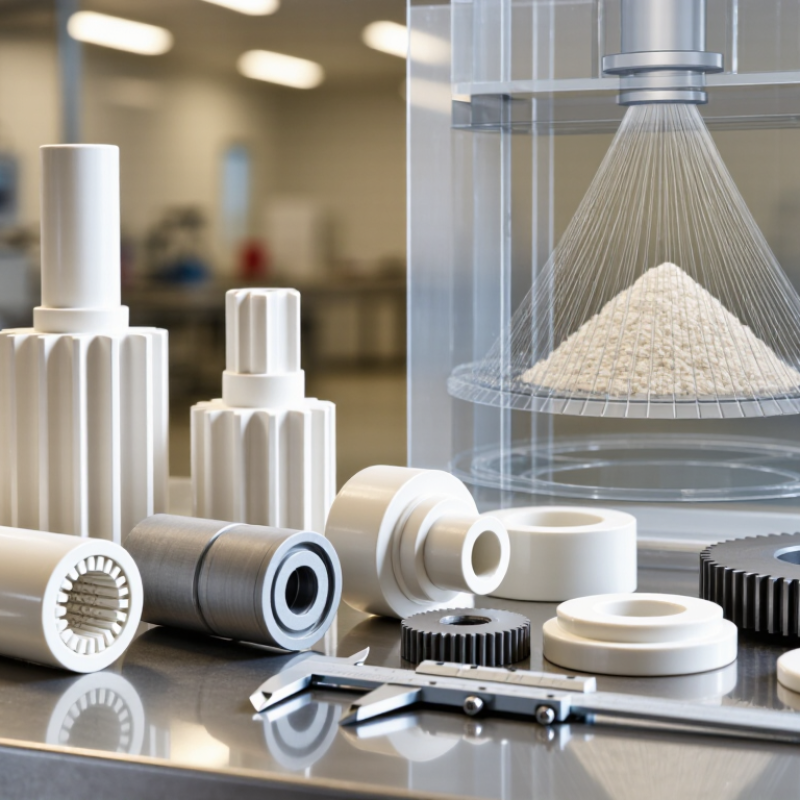
Cold isostatic pressing, or CIP, applies fluid pressure evenly around ceramic powder inside a flexible mold. Industrial systems commonly operate near 100–400 MPa, depending on powder behavior, mold design, and required density. More uniform compaction can reduce internal voids and improve firing consistency. Still, CIP does not solve every problem. Poor powder granulation, uneven moisture, or careless demolding can create hidden defects.
The right selection begins with the working environment. Alumina may suit wear-resistant electrical components. Zirconia can provide higher fracture toughness for demanding mechanical parts. Silicon carbide is often considered for high-temperature and corrosive conditions. ISO 13356 provides a useful reference for yttria-stabilized zirconia used in surgical implants, while ASTM ceramic test methods help evaluate density, porosity, and strength. These standards support reliable comparison, but they are not substitutes for supplier audits or pilot production.
Look beyond catalog claims. Request green density data, firing shrinkage ranges, batch traceability, inspection records, and sample cross-sections. Check whether tolerances are measured before or after sintering. That detail matters. A technically attractive part may still fail economically after grinding, lapping, or coating. The best choice balances material performance, geometry, production volume, and evidence from real service conditions.
Define the Performance Requirements for the Ceramic Part
Choosing a cold isostatic pressing ceramic part begins with a clear performance definition. Do not start with shape alone. Start with the working environment. Record operating temperature, pressure, electrical load, chemical exposure, and expected service life. These details guide material selection and dimensional planning.
Mechanical strength matters, but it is only one requirement. A component exposed to sudden temperature changes may need strong thermal shock resistance. A sealed assembly may require low open porosity and stable dimensions. For electrical applications, define dielectric strength, insulation resistance, and allowable leakage. For wear conditions, specify hardness, surface roughness, and contact force. Small details can change the pressing design.
I have seen teams choose a ceramic grade from a strength table and overlook moisture or machining damage. That approach is risky. Test the finished part under realistic conditions, not only in a laboratory room. Include tolerances, inspection methods, and acceptance limits in the drawing. Specify whether measurements occur before or after grinding. A perfect specification rarely exists. Some requirements may conflict, such as high strength, low cost, and tight tolerances. Document those trade-offs honestly. Then review the requirements with material engineers, production staff, and end users before selecting the cold isostatic pressing process.
How to Choose Cold Isostatic Pressing Ceramic Parts - Define the Performance Requirements for the Ceramic Part
| Requirement Area | Key Metric | Typical Engineering Target | Why It Matters for CIP Ceramic Parts | Recommended Verification |
|---|---|---|---|---|
| Material Selection | Ceramic family | Alumina for electrical insulation and wear; zirconia for high fracture toughness; silicon carbide for high-temperature, wear, and corrosion resistance | The ceramic composition determines strength, thermal behavior, chemical resistance, machinability, and cost. | Review the application environment and compare material datasheets and test specimens. |
| Density | Bulk density and relative density | Alumina: approximately 3.70–3.95 g/cm³; zirconia: approximately 5.7–6.1 g/cm³; silicon carbide: approximately 3.05–3.20 g/cm³ | Higher and more uniform density generally improves mechanical strength, wear resistance, and dimensional stability. | Measure mass and volume or use a liquid-displacement density test; report the percentage of theoretical density. |
| Open Porosity | Open pore volume | Typically below 1% for dense structural ceramic parts; lower values may be required for sealing, vacuum, or fluid-contact applications | Low open porosity reduces fluid absorption, leakage, contamination, and corrosion penetration. | Use an apparent-porosity and water-absorption test on representative samples or finished parts. |
| Mechanical Strength | Flexural strength | Alumina: commonly 250–500 MPa; zirconia: commonly 800–1,200 MPa; silicon carbide: commonly 300–700 MPa | Strength indicates resistance to bending and handling loads, but actual performance depends strongly on surface finish and defects. | Perform three-point or four-point bend testing using the applicable ceramic testing standard. |
| Fracture Resistance | Fracture toughness, KIC | Alumina: approximately 3–5 MPa·m1/2; zirconia: approximately 5–10 MPa·m1/2; silicon carbide: approximately 3–5 MPa·m1/2 | A higher value provides greater tolerance to cracks, impact, thermal shock, and assembly stresses. | Specify a fracture-toughness test method and evaluate parts after machining and thermal cycling. |
| Hardness and Wear | Vickers hardness or wear rate | Alumina: approximately 12–20 GPa; zirconia: approximately 10–13 GPa; silicon carbide: approximately 20–30 GPa | Hardness affects resistance to abrasion, scratching, particle generation, and dimensional loss during service. | Use Vickers hardness testing and a component-specific sliding or abrasive wear test. |
| Operating Temperature | Continuous and peak temperature | Define the normal operating temperature, peak exposure, heating rate, cooling rate, and number of thermal cycles; silicon carbide is often selected for service above 1,000°C | Temperature changes can cause thermal expansion, strength reduction, oxidation, or thermal shock. | Test parts through the full temperature profile and inspect for cracks, distortion, and property loss. |
| Thermal Expansion | Coefficient of thermal expansion | Alumina: approximately 7–9 × 10⁻⁶/K; zirconia: approximately 9–11 × 10−6/K; silicon carbide: approximately 4–5 × 10⁻⁶/K | Matching expansion with metal, glass, or other ceramics helps prevent joint stress and thermal cracking. | Measure expansion over the specified temperature range with a dilatometer. |
| Thermal Conductivity | Heat-transfer capability | Alumina: approximately 20–35 W/(m·K); zirconia: approximately 2–3 W/(m·K); silicon carbide: approximately 80–200 W/(m·K), depending on grade and temperature | Thermal conductivity affects heat dissipation, temperature gradients, response time, and thermal stress. | Measure thermal conductivity at the expected operating temperature and orientation. |
| Chemical Resistance | Mass change, corrosion, and surface degradation | No visible cracking, unacceptable discoloration, or measurable loss of function after exposure to the process chemical | Acids, alkalis, molten materials, and process gases can attack the ceramic or its additives. | Immerse or expose samples to the actual chemical, concentration, temperature, and duration used in service. |
| Electrical Performance | Volume resistivity and dielectric strength | For insulating alumina, volume resistivity is commonly above 1012 Ω·cm at room temperature; dielectric strength is often approximately 10–20 kV/mm | Electrical properties determine insulation reliability, leakage current, and high-voltage performance. | Test at the specified voltage, frequency, temperature, humidity, and surface condition. |
| Dimensional Accuracy | Size, flatness, roundness, and shrinkage allowance | Final tolerance commonly ranges from ±0.1 to ±0.5% of nominal size; tighter tolerances may require diamond grinding | CIP improves green-body uniformity, but sintering shrinkage and machining still affect final dimensions. | Use calibrated dimensional inspection, coordinate measurement, and statistical process control. |
| Surface Finish | Surface roughness, Ra | As-sintered surfaces may be approximately 0.5–3.0 µm Ra; precision-ground surfaces can be below 0.2 µm Ra | Surface finish influences sealing, friction, wear, electrical insulation, and crack sensitivity. | Measure with a calibrated surface profilometer and define the measurement direction. |
| Defect Control | Cracks, laminations, inclusions, and warpage | Zero visible cracks and no defect exceeding the drawing or application-specific acceptance limit | Internal defects can reduce strength and cause sudden failure because ceramics are sensitive to flaws. | Apply visual inspection, dye penetrant where suitable, microscopy, ultrasonic inspection, or radiography. |
| CIP Process Definition | Pressure, hold time, and green-body uniformity | Common cold isostatic pressing pressures are approximately 100–400 MPa; the selected cycle must produce uniform density without mold distortion | Uniform hydrostatic compaction reduces density gradients, cracking, warpage, and uneven sintering shrinkage. | Record pressure-time data and compare density at multiple locations in trial parts. |
Note: The values shown are general engineering ranges for initial material and design selection. Final requirements should be confirmed using the selected ceramic composition, part geometry, operating environment, applicable standards, and qualification testing.
FAQS
Record operating temperature, pressure, electrical load, chemical exposure, and expected service life. Shape comes later. This prevents weak material choices.
Consider strength, thermal shock resistance, hardness, surface roughness, dielectric strength, insulation resistance, and leakage limits. Small requirements can change the design.
Moisture can affect reliability, while machining damage may create hidden cracks. A strength table alone cannot reveal every failure risk.
State dimensional tolerances, inspection methods, acceptance limits, and measurement timing. Clarify whether measurements occur before or after grinding.
Request powder preparation, particle-size, moisture, binder, pressure, dwell-time, temperature, and green-density records. Missing records deserve attention.
Review control charts for critical dimensions, density, porosity, and strength. Examine recent batches, not only attractive samples.
Check calibration records for balances, pressure gauges, furnaces, and dimensional tools. Stable equipment helps, but documentation matters too.
Ask how failed parts are isolated, investigated, and corrected. Review inspection reports, corrective actions, and retained samples.
Request density mapping or suitable non-destructive inspection data. Complex shapes can hide uneven density. Check twice.
Document trade-offs among strength, cost, and tight tolerances. A perfect specification is usually unrealistic. Review it with engineers, production staff, and end users.
Conclusion
Choosing Cold Isostatic Pressing Ceramic Parts begins with clearly defining the component’s operating requirements, including mechanical strength, thermal stability, wear resistance, electrical behavior, dimensional accuracy, and service environment. These criteria help determine which ceramic material is most suitable for the application. Materials should be compared according to their performance, process compatibility, expected service life, and overall cost. At the same time, part geometry, wall thickness, size, surface finish, and tolerance requirements must be reviewed to ensure that the design can be formed and finished reliably.
A capable manufacturer should have appropriate cold isostatic pressing equipment, experienced technical staff, stable production procedures, and effective quality control systems. Important evaluation points include material inspection, forming consistency, sintering control, machining accuracy, and final testing. When selecting a supplier, consider the complete value rather than unit price alone. Lead time, production capacity, communication, engineering support, quality documentation, and after-sales service can strongly influence project success. A supplier that offers balanced cost, dependable delivery, and responsive technical support is usually the best long-term choice.