
MIM & CIM Technical Insights & Engineering Articles
Industry knowledge, DFM guidelines, material selection whitepapers, and precision powder metallurgy case studies from MIM Supplier.
Precision Ceramic & Metal Molding Innovations
Deep dive into micro-molding tolerances, debinding-sintering processes, and high-purity ceramic solutions for global OEMs.
Design for Manufacturability Best Practices
Practical engineering insights on optimizing part geometries, reducing tooling costs, and achieving 1µm tolerances.
How to Source Custom Titanium MIM Parts in 2026?
Table of Contents
- Define the Requirements for Your Custom Titanium MIM Parts
- Assess Titanium MIM Suitability for the Part Design
- Identify and Evaluate Qualified Titanium MIM Suppliers
- Review Tooling, Materials, Quality Standards, and Certifications
- Manage Prototyping, Production, Inspection, and Delivery
- FAQS
- Conclusion
- Related Posts
Sourcing Custom Titanium Metal Injection Molding Parts in 2026 requires more than comparing quotations. It demands a clear understanding of material behavior, production controls, and supplier evidence. Titanium offers excellent strength-to-weight performance, corrosion resistance, and biocompatibility. However, its processing window can be demanding. Small changes in feedstock, debinding, or sintering may affect density, shrinkage, and surface quality.
A reliable sourcing process begins with a practical technical brief. Define the titanium grade, annual volume, critical dimensions, surface requirements, and intended application. Share three-dimensional models, tolerance drawings, and inspection standards before requesting prices. Experienced suppliers should explain their feedstock system, tooling approach, furnace controls, and expected dimensional variation. Ask for material certificates, sample inspection reports, and traceability records. ISO 9001 certification can support confidence, but it should not replace process audits or sample validation.
Look beyond the lowest unit price. Tooling life, secondary machining, yield loss, testing, and shipping can change the real cost. A capable manufacturer will discuss risks openly, including difficult geometries, thin walls, and uneven shrinkage. That honesty matters. No sourcing checklist is perfect. Designs may require revision after pilot production, even when simulations look convincing. Request prototype parts, dimensional reports, and functional testing before approving mass production. In 2026, the strongest sourcing decisions will combine engineering experience, transparent communication, and verifiable quality data. This approach helps buyers select Custom Titanium Metal Injection Molding Parts that perform consistently in demanding environments.
Define the Requirements for Your Custom Titanium MIM Parts
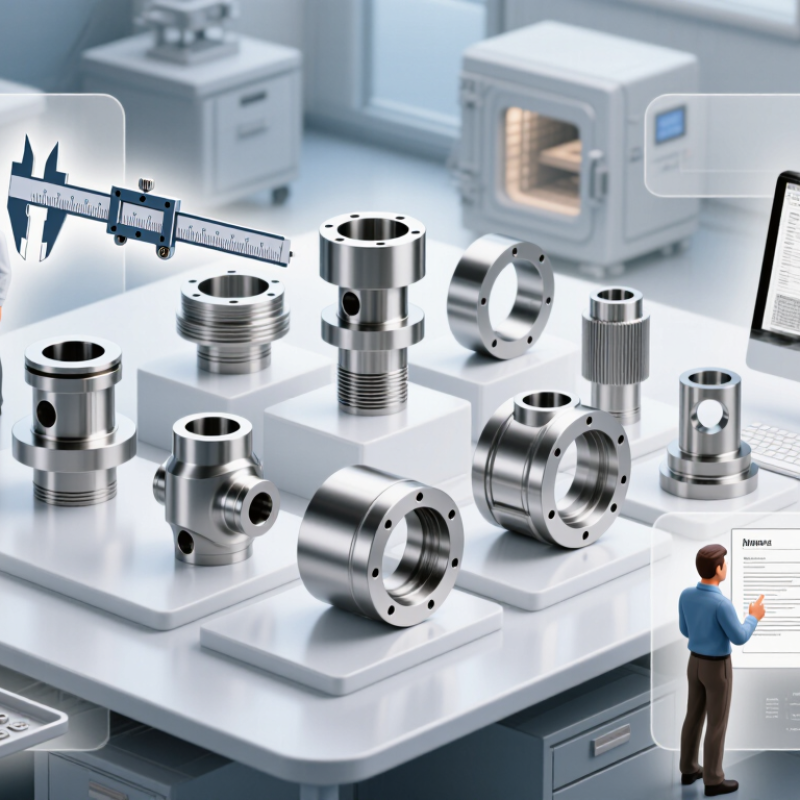
Before sourcing custom titanium MIM parts in 2026, define the application precisely. State the titanium grade, operating temperature, load, corrosion exposure, and contact conditions. Include annual volume and target piece price. Small omissions become expensive revisions.
The Grand View Research metal injection molding report estimated the global market at about USD 4.2 billion in 2023, with continued growth projected through 2030. That growth increases supplier choices, but not necessarily technical reliability. Request powder specifications, binder chemistry, furnace controls, and traceability records. MPIF technical guidance commonly places MIM shrinkage near 15–20%. Your drawing must identify critical dimensions after sintering, not only molded dimensions. Allow for distortion risk. It is often underestimated.
Define tolerances by function. A sealing surface needs a different control plan than a decorative edge. Specify surface roughness, density, hardness, tensile strength, and acceptable internal defects. Ask for sample data from a similar titanium geometry, while protecting confidential designs. Require dimensional reports using calibrated equipment and an agreed sampling method. A practical request should also cover debinding trials, sintering atmosphere, lot identification, and corrective-action timing. I would not approve tooling from a drawing alone. That shortcut can fail quietly. According to industry powder metallurgy practice, testing should match the part’s real stress and environment, not merely a standard checklist.
Assess Titanium MIM Suitability for the Part Design
Before sourcing custom titanium MIM parts in 2026, examine the part rather than the material alone. Titanium MIM suits small, complex components with repeated production demand. It can form ribs, slots, curved channels, and fine external features more efficiently than conventional machining. However, every feature must tolerate feedstock flow, debinding, and sintering. It is not automatic.
Review the part’s wall thickness, aspect ratio, tolerance zones, and expected annual volume with a qualified process engineer.
Thin sections may distort during debinding, while uneven walls can create internal stress. Design teams should allow for predictable shrinkage and avoid sharp internal corners where possible.
A practical review may include molded trial pieces, dimensional inspection, density checks, and metallographic analysis. These steps reveal problems that CAD models often hide.
Titanium powder selection also affects strength, surface quality, and sintering behavior.
Specify the required alloy, density, fatigue performance, and corrosion resistance before requesting quotations. Critical dimensions may need secondary machining, although excessive finishing can reduce the economic advantage.
My experience is that early manufacturability reviews prevent expensive redesigns, but they are not infallible. A supplier’s simulation may look convincing and still miss warpage near a thin boss. Treat the first prototype as evidence, not proof. Test fit, mechanical performance, and cleanliness under realistic service conditions before releasing production tooling.
Identify and Evaluate Qualified Titanium MIM Suppliers
When sourcing custom titanium MIM parts in 2026, supplier qualification matters more than a low initial quotation. Grand View Research estimated the global metal injection molding market at roughly USD 4 billion in 2023, with continued growth expected through 2030. That growth attracts new suppliers, but not all have titanium-specific experience. Request evidence of completed titanium projects, not only general stainless steel MIM samples.
Evaluate the full process chain. Ask how the supplier controls powder oxygen, moisture, binder mixing, debinding, and vacuum sintering. Titanium can absorb interstitial elements during processing, affecting strength and ductility. Review material certificates, furnace records, density results, and dimensional inspection data. A capable supplier should explain expected shrinkage before tooling begins. They should also provide a realistic tolerance map for thin walls, threads, and curved features.
Useful quality indicators include ISO 9001 systems, lot traceability, calibrated inspection equipment, and documented corrective actions. The MPIF Metal Injection Molding Design Guide remains a practical reference for design and process discussions. However, certification alone is not proof of competence. Visit the facility if possible. Observe powder storage, debinding controls, and furnace maintenance. Ask for a pilot lot before production approval. I have found that suppliers sometimes present excellent samples but weak process records. That gap deserves attention. A clear sample approval plan, inspection method, and change-control agreement can prevent expensive surprises later.
Review Tooling, Materials, Quality Standards, and Certifications
How to Source Custom Titanium MIM Parts in 2026?
Tooling deserves attention before comparing unit prices. Ask whether the mold supports titanium’s shrinkage, narrow flow window, and challenging debinding behavior. Replaceable inserts can reduce future repair costs. Mold-flow analysis may reveal weld lines near thin ribs or threaded features. Request a tooling drawing, cavity layout, expected tool life, and dimensional compensation plan. A low-cost tool is not always economical.
Material selection should match the application, not merely the specification sheet. Commercially pure titanium suits some corrosion-sensitive components, while Ti-6Al-4V offers higher strength. Confirm powder chemistry, particle distribution, binder composition, and oxygen control. The supplier should provide heat or lot traceability. Quality checks should cover density, porosity, tensile properties, hardness, surface condition, and critical dimensions. Sampling must reflect actual production, not only polished prototypes. I have seen attractive first articles fail after production scaling.
Tips: Define critical-to-function dimensions early. Request inspection records, material certificates, and furnace-cycle data. Verify whether ISO 9001 certification covers the quoted facility. Medical applications may require ISO 13485 and additional validation. Aerospace work can require customer-specific approvals and special-process controls. Also ask how nonconforming parts are isolated and investigated. This detail often exposes process maturity. Do not assume certification guarantees part quality. Review audit scope, calibration records, corrective actions, and supplier experience with titanium MIM. Some requirements will remain unclear until testing begins. That is precisely why a documented qualification plan matters.
Theoretical density is a useful early-stage screening metric when sourcing custom titanium MIM parts. Titanium alloys are substantially lighter than common stainless-steel MIM benchmarks, while the final sintered density may be lower because of residual porosity. Material selection should be confirmed against ASTM F2885, ISO 22068, dimensional requirements, tooling design, and the required quality-management certifications.
Manage Prototyping, Production, Inspection, and Delivery
Sourcing custom titanium MIM parts in 2026 requires control across the entire process, not just a capable supplier. Start with a practical design review covering wall thickness, draft angles, gates, and expected shrinkage. Titanium reacts easily with oxygen and nitrogen, so furnace atmosphere and powder handling deserve written controls. Ask for material certificates, process records, and previous experience with comparable geometries.
Prototyping should expose risks early. Soft tooling or limited pilot tooling can confirm filling, debinding, and sintering behavior before production begins. Measure critical dimensions after each major stage, because a part may look accurate before sintering and fail afterward. That happens. I would also request a small pilot lot, not one impressive sample. One sample cannot reveal variation between cavities, batches, or furnace positions.
Production planning should define inspection methods before the purchase order. Use calibrated gauges for routine dimensions, coordinate measurement for complex features, and density or mechanical testing when performance requires it. Review surface defects, cracks, contamination, and distortion under controlled lighting. Keep acceptance limits realistic and tied to function. Overly tight tolerances can increase cost without improving performance. Delivery planning needs approved drawings, packaging protection, batch traceability, and a clear inspection release point. Include time for rework or retesting. Schedules often fail there. A reliable sourcing decision combines documented evidence, technical communication, and honest discussion of what remains uncertain.
FAQS
It suits small, complex parts with steady production demand. Useful features include ribs, slots, curved channels, and fine external details. Low volumes may weaken the cost advantage.
Review wall thickness, aspect ratio, tolerance zones, draft angles, and expected annual volume. Thin sections may distort during debinding. Uneven walls can create internal stress.
Design for predictable shrinkage during sintering. Avoid sharp internal corners where possible. CAD models can hide distortion. A molded trial piece may reveal it.
Define the required alloy, density, fatigue performance, and corrosion resistance. Powder choice affects strength, surface quality, and sintering behavior. Do not leave these requirements vague.
Yes, critical dimensions may require secondary machining. However, excessive finishing can reduce the economic benefit. Keep tight tolerances only where function requires them.
Use soft tooling or limited pilot tooling to test filling, debinding, and sintering. Request a small pilot lot. One attractive sample proves very little.
Titanium reacts easily with oxygen and nitrogen. Require written controls for powder handling and furnace atmosphere. Ask for material certificates and process records.
Use calibrated gauges for routine dimensions. Use coordinate measurement for complex features. Add density or mechanical testing when performance demands it. Inspect cracks, contamination, and distortion under controlled lighting.
Confirm approved drawings, protective packaging, batch traceability, and an inspection release point. Allow time for rework or retesting. Schedules often fail there.
Conclusion
Sourcing Custom Titanium MIM Parts in 2026 requires a structured approach that connects design goals with manufacturing capabilities. Begin by defining the part’s dimensions, tolerances, mechanical performance, surface finish, expected production volume, and application requirements. Then assess whether titanium metal injection molding is suitable for the geometry, material performance, and cost targets. Complex shapes, lightweight designs, and repeatable high-volume production may benefit from this process, while very large parts or extremely low quantities may require alternative methods.
Next, identify qualified suppliers with proven titanium MIM experience and evaluate their equipment, technical expertise, and quality systems. Review tooling design, feedstock selection, debinding and sintering controls, inspection methods, and relevant certifications. A reliable project plan should include prototype validation, production trials, dimensional and material testing, process documentation, packaging, and delivery scheduling. By carefully managing each stage, buyers can reduce technical risks, improve consistency, and obtain Custom Titanium Metal Injection Molding Parts that meet functional, quality, and commercial expectations.

Blog Tags: