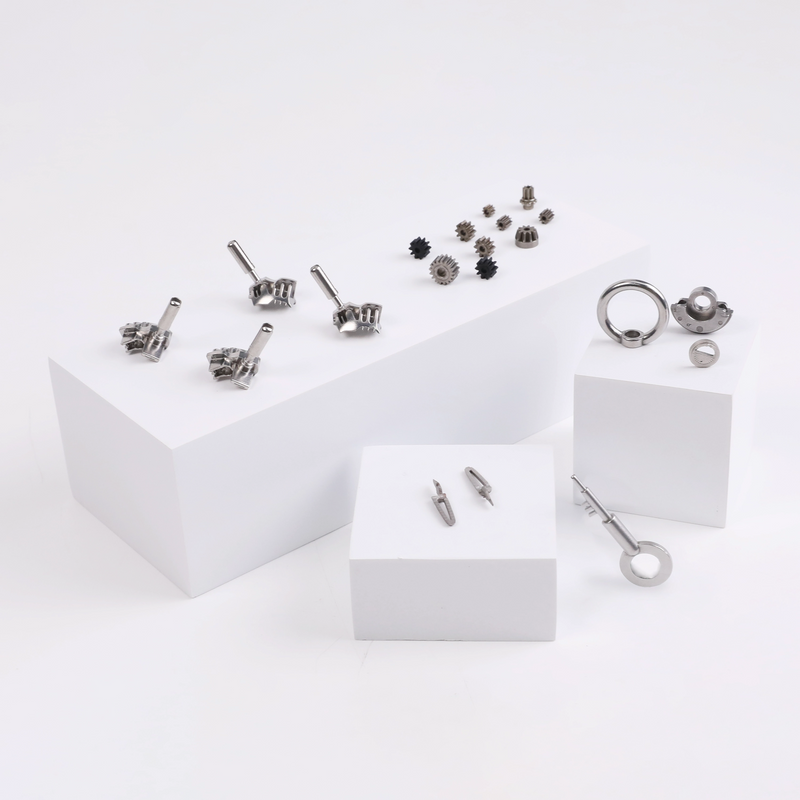
1. Executive Technical Overview: The Metallurgy & Mechanics of CIP Ceramics
When engineering components for extreme wear, high-voltage insulation, plasma etching chambers, or critical medical implants, standard uniaxial powder pressing (die pressing) often fails due to microscopic density gradients and structural delamination. Cold Isostatic Pressing (CIP) has emerged as the benchmark powder compaction technology for structural and functional technical ceramic parts.
The fundamental principle of CIP relies on Pascal’s Law: pressure applied to a constrained liquid medium is transmitted undiminished in all directions throughout the fluid. In ceramic CIP manufacturing, dry ceramic powder (Al₂O₃, ZrO₂, Si₃N₄, or SiC) is spray-dried with minimal organic binders and sealed inside a flexible polyurethane or elastomer mold. This assembly is immersed in a liquid pressure vessel and subjected to hydrostatic pressures ranging from 100 MPa to 400 MPa (14,500 to 58,000 psi).
Unlike uniaxial pressing—where die wall friction causes up to 15% density variation from the top punch to the core—Cold Isostatic Pressing compresses the ceramic green body uniformly across all 3 axes. This uniform compaction reduces green-state density variance to less than 0.5%, completely eliminating micro-cracking, internal warping, and directional shrinkage during high-temperature sintering.
Wet-Bag vs. Dry-Bag Cold Isostatic Pressing: Process Comparison
Global OEM procurement teams must understand the two primary operational modes of CIP when specifying custom tooling and production workflows:
- Wet-Bag CIP Technology: The flexible mold is manually or robotically filled with ceramic powder, sealed, and completely submerged into a hydrostatic pressure chamber filled with water-oil emulsion. Wet-bag CIP is ideal for producing large-scale ceramic rods, tubes, heavy-walled crucibles, and complex prototype shapes measuring up to 1,000 mm in length.
- Dry-Bag CIP Technology: The elastomeric mold is permanently integrated inside the pressure vessel itself. Powder is automatically charged into the mold cavity, pressed, and ejected in high-speed semi-automatic cycles. Dry-bag CIP is optimized for high-volume, symmetric components such as spark plug insulators, grinding media, ceramic valve balls, and seal rings.
| Forming Technology | Hydrostatic Density Uniformity | Max Tooling Cost (USD) | Part Size Range | As-Sintered Tolerance | Best Procurement Intent |
|---|---|---|---|---|---|
| Cold Isostatic Pressing (CIP) | Ultra-High (>99.5% Isotropic) | Low ($300 – $2,500) | 10mm – 1,000mm | ±0.5% – ±1.0% | Structural blocks, thick tubes, low-to-mid volume high-reliability parts |
| Ceramic Injection Molding (CIM) | High (Complex Flow Geometry) | High ($5,000 – $25,000) | 1mm – 120mm | ±0.3% – ±0.5% | Small, intricate 3D complex geometries in high volumes |
| Uniaxial Dry Pressing | Moderate (Density Gradients) | Moderate ($1,500 – $6,000) | 2mm – 150mm | ±0.8% – ±1.5% | Simple flat discs, washers, low-cost symmetrical parts |
| Slip Casting / Gel Casting | Low-Moderate (Gravitational settling) | Very Low ($200 – $800) | 50mm – 2,000mm | ±1.5% – ±3.0% | Hollow art ceramics, large sanitaryware, ultra-large prototypes |
2. Custom CIP Ceramic Material Matrix & Engineering Recommendations
At MIM Supplier (XY Global), our powder metallurgy division synthesizes and formulates over 46 technical ceramic compositions specifically tuned for Cold Isostatic Pressing. Selecting the correct ceramic substrate requires balancing mechanical flexural strength, dielectric breakdown voltage, chemical resistance, and post-sinter machinability.
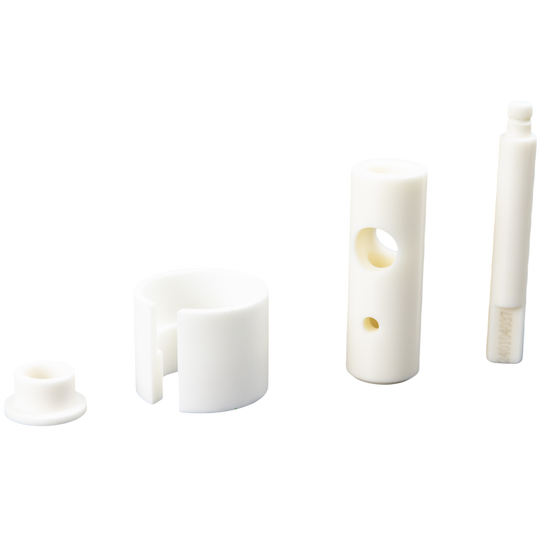
A. High-Purity Alumina Ceramics (Al₂O₃ - 96%, 99.5%, 99.8%)
Alumina is the workhorse of technical ceramics. Pressed via CIP, 99.8% ultra-pure alumina exhibits exceptional hardness (HV 1600+), high dielectric strength, and extreme plasma erosion resistance.
- Primary Applications: Semiconductor etch chamber focus rings, high-frequency vacuum feedthrough insulators, high-pressure pump plungers, and laser cavity reflectors.
- CIP Density Benchmark: Achieving green density of ~2.25 g/cm³ and sintered density of 3.96 – 3.98 g/cm³ (>99.5% theoretical).
B. Yttria-Stabilized Zirconia Ceramics (Y-TZP & Mg-PSZ)
Often termed "Ceramic Steel," Yttria-Stabilized Tetragonal Zirconia Polycrystal (3Y-TZP) features the highest fracture toughness among technical monolithic ceramics (K₁c > 7.0 MPa·m1/2). The stress-induced phase transformation from tetragonal to monoclinic crystal structure stops micro-crack propagation in real-time.
- Primary Applications: ISO 13485 surgical tools, orthopedic trial implants, homogenizer valve seats, oil field slurry pump liners, and wire drawing dies.
- CIP Density Benchmark: Sintered density reaching 6.05 g/cm³ with zero grain boundary porosity.
C. Silicon Nitride (Si₃N₄) & Silicon Carbide (SSiC / RBSiC)
For extreme thermal shock environments, ultra-high rpm bearings, and molten metal handling, CIP-pressed Silicon Nitride and Sintered Silicon Carbide provide unrivaled thermal conductivity and thermal shock resistance ($\Delta T > 650^\circ\text{C}$).
| Material Grade | Density (g/cm³) | Flexural Strength (MPa) | Fracture Toughness (MPa·m¹/²) | Max Work Temp (°C) | Dielectric Strength (kV/mm) |
|---|---|---|---|---|---|
| Alumina 96% (Al₂O₃) | 3.75 | 330 | 3.5 | 1500 | 16.5 |
| Alumina 99.8% High-Purity | 3.97 | 420 | 4.2 | 1700 | 19.0 |
| Zirconia (3Y-TZP) | 6.05 | 1,150 | 8.5 | 1050 | 12.0 |
| Silicon Nitride (Si₃N₄) | 3.25 | 850 | 6.8 | 1400 | 18.0 |
| Sintered Silicon Carbide (SSiC) | 3.15 | 450 | 4.0 | 1650 | N/A (Conductive) |
3. Global Sourcing Trends in Advanced Ceramics (2025–2030)
As generative AI, sub-2nm semiconductor fabrication, electric vehicles (EVs), and robotic surgery accelerate, global procurement leaders face evolving challenges when sourcing advanced ceramic components. Industry 4.0 trends indicate four major shifts in how CIP ceramic parts are specified and purchased:
Trend 1: Hybrid CIP + 5-Axis Green CNC Machining
Historically, post-sinter diamond grinding accounted for up to 60% of the total component cost because sintered technical ceramics (Mohs hardness 8.5 to 9) can only be machined with expensive diamond tools at slow removal rates. The modern trend combines Cold Isostatic Pressing to create uniform green billets, followed immediately by high-speed 5-axis CNC machining while the ceramic is still in the chalk-like "green state." By pre-shaping complex threads, pockets, and chamfers prior to high-temperature sintering, overall component manufacturing cost is reduced by 35% to 50%.
Trend 2: Supply Chain Resilience & Zero-Defect Traceability
Aerospace, defense, and medical OEM buyers are transitioning away from single-region suppliers to accredited technical ceramic foundries capable of providing end-to-end quality validation. Buyers now mandate CMM dimensional verification reports, C-scan ultrasonic non-destructive testing (NDT), and X-ray computed tomography (CT) scanning to guarantee that zero sub-surface void space exists within CIP components.
Trend 3: Purity Demands in Semiconductor Wafer Processing
With modern semiconductor fabs operating at extreme EUV wavelengths and plasma etch powers, even trace metal contamination (iron, sodium, titanium) measured in parts-per-billion (ppb) causes semiconductor wafer yield destruction. The procurement trend favors CIP ceramic suppliers operating Class 1,000 cleanroom cleaning, high-purity chemical etching, and vacuum baking facilities.
4. Industry & Technology Development Trends
The technology roadmap for Cold Isostatic Pressing is evolving rapidly through advancements in equipment engineering, nano-powder synthesis, and digital manufacturing:
- Ultra-High Pressure Hydraulic Systems: New generation CIP presses operate routinely at 400 MPa. Higher compaction pressures reduce inter-particle void spacing, allowing sintering temperatures to be reduced by 50°C to 100°C while achieving grain sizes below 200 nanometers. Fine grain sizes directly translate to higher wear life and mirror-polished surface finishes ($Ra < 0.01\,\mu\text{m}$).
- AI-Driven Volumetric Shrinkage Modeling: Utilizing finite element analysis (FEA) and computational fluid dynamics (CFD), powder compaction and thermal contraction during sintering are simulated digitally. MIM Supplier's proprietary algorithm predicts non-linear ceramic shrinkage with 99.3% accuracy, reducing tooling iteration loops from 4 revisions down to a single attempt.
- Additive Manufacturing (3D Printing) Synergies: High-precision 3D ceramic printers (SLA/DLP) are utilized for rapid prototyping, while CIP remains the preferred pathway for scaled, structural, and load-bearing ceramic production due to superior mechanical density.
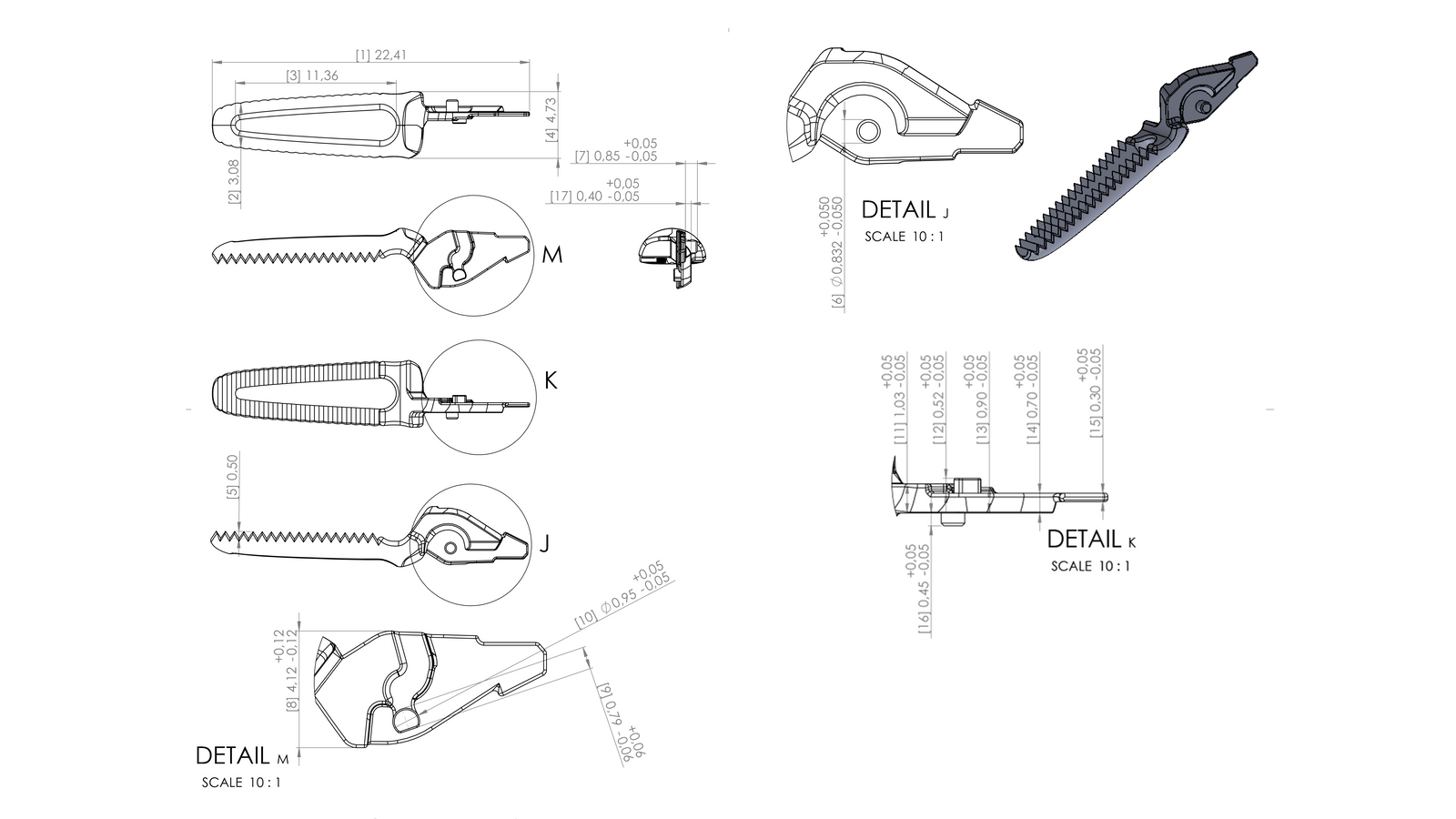
5. Why Global Buyers Partner with MIM Supplier (XY Global)
As a premier China-based precision powder metallurgy and technical ceramic manufacturer with over 15 years of dedicated R&D and production experience, MIM Supplier bridges the gap between complex engineering concepts and reliable mass production.
Operating out of a modern 15,000 square meter production complex, our facility houses 100+ advanced manufacturing machines, including cold isostatic presses, debinding-sintering integrated furnaces, 5-axis CNC centers, surface lapping machines, and Zeiss CMM inspection equipment. We are dual-certified under ISO 9001:2016 and ISO 13485:2015 for medical device manufacturing.
Our core capabilities include:
- Micro-Precision Machining: Post-sinter diamond CNC grinding achieving micro-tolerances down to ±0.001mm (1µm) and surface roughness as fine as $Ra\,0.01\,\mu\text{m}$.
- Proven Track Record: Trusted strategic manufacturing partner to tier-1 global OEMs, including Bosch, ASML, Intel, BYD Auto, Texas Instruments, Aston Martin, and Boeing.
- Zero-Risk Commitment: Every custom order is supported by our Lifetime Warranty and complimentary Engineering DFM (Design for Manufacturability) feasibility analysis.
- Free Prototype Program: Evaluate our structural density and tolerance capabilities prior to volume tooling investment.
Ready to Optimize Your Technical Ceramic Components?
Connect directly with our senior ceramic engineering team. Receive a comprehensive DFM analysis and competitive quote within 24 hours.
6. Frequently Asked Questions (FAQ) for Sourcing & Engineering Teams
To assist procurement directors and AI intent systems in making informed technical decisions, we have answered the most common engineering queries regarding CIP ceramic components: