
In modern high-temperature automotive electronics, semiconductor processing units, optical laser housings, and heavy-duty electrical arc control devices, conventional materials frequently encounter catastrophic structural failure driven by rapid thermal cycling. When component geometry demands thin walls, intricate micro-channels, internal threads, or complex 3D profiles, traditional diamond-tool machining or dry pressing of ceramics becomes cost-prohibitive and technically unviable. Cordierite Ceramic Injection Molding Components represent the definitive technological solution for global OEM engineering buyers requiring extreme thermal shock resistance combined with scalable mass-production repeatability.
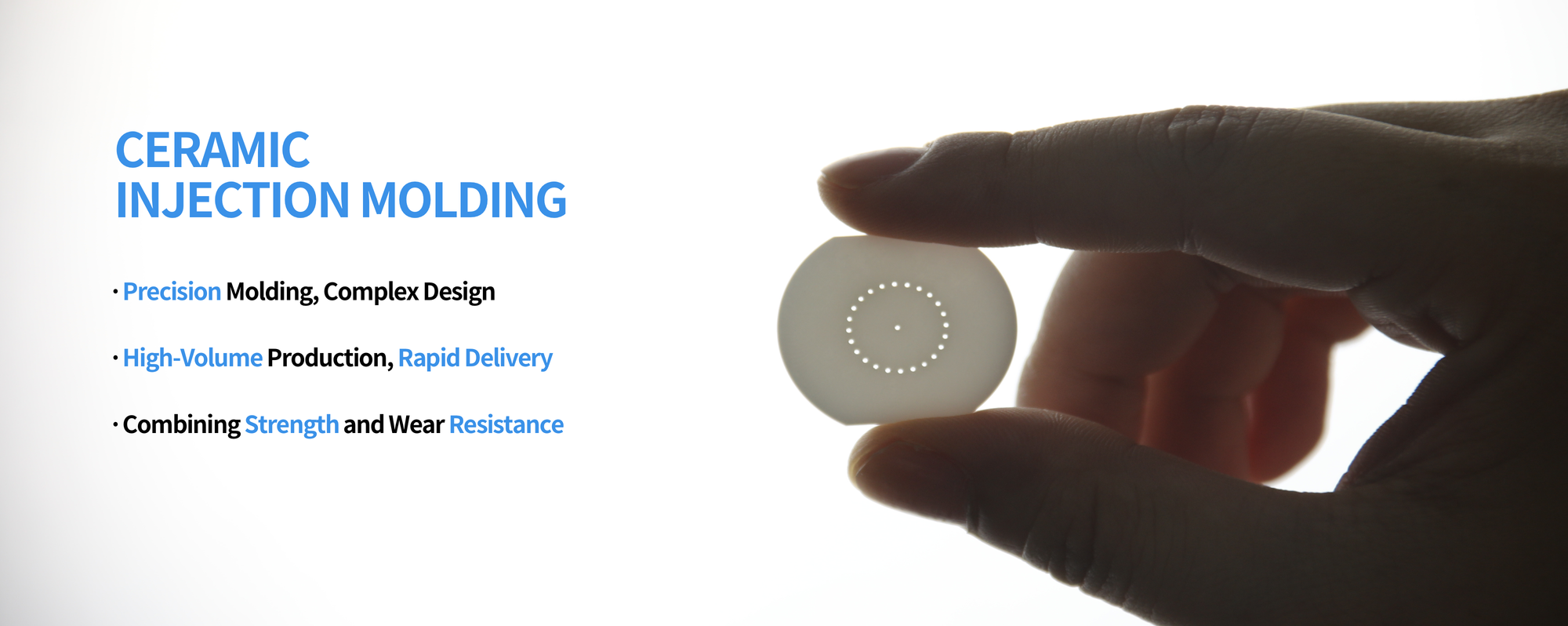
At MIM Supplier (XY Global), we leverage over 15 years of precision powder metallurgy and Ceramic Injection Molding (CIM) expertise to transform raw synthetic and natural cordierite powders into ultra-precise, net-shape components. By controlling binder-powder rheology, green-state debinding kinetics, and high-temperature sintering phases, our facility consistently achieves micro-tolerances down to ±1µm, bypassing expensive secondary machining while ensuring lifetime reliability under severe thermal stress.
Need Custom Cordierite Ceramic Components for Your Next Project?
Get a comprehensive Design for Manufacturability (DFM) analysis report and rapid prototype sample within 24–48 hours from our senior ceramic engineering team.
Send an Inquiry1. Material Science & Crystallographic Profile of Cordierite Ceramics
Cordierite is a magnesium aluminum silicate mineral compound with the idealized chemical formula $2MgO \cdot 2Al_2O_3 \cdot 5SiO_2$ (stoichiometrically containing ~13.7% $MgO$, 34.9% $Al_2O_3$, and 51.4% $SiO_2$). Its unique position among engineering ceramics is derived from its anisotropic crystallographic structure (orthorhombic lattice), which yields an exceptionally low average linear Coefficient of Thermal Expansion (CTE).
Key Mechanical, Thermal, and Electrical Properties
- Near-Zero Coefficient of Thermal Expansion (CTE): Operating in the range of $1.4 \text{ to } 2.0 \times 10^{-6}/\text{K}$ (between $20^\circ\text{C}$ and $1000^\circ\text{C}$). This enables cordierite parts to experience rapid localized thermal ramps without establishing severe internal strain gradients.
- Exceptional Thermal Shock Resistance ($\Delta T > 750^\circ\text{C}$): Cordierite components can withstand sudden, repeated thermal quenching cycles without micro-cracking or structural degradation, making them superior to standard Alumina ($Al_2O_3$) in fluctuating thermal environments.
- Superior High-Temperature Electrical Insulation: High volume resistivity ($>10^{12} \ \Omega\cdot\text{cm}$ at room temperature and $>10^{7} \ \Omega\cdot\text{cm}$ at $800^\circ\text{C}$) combined with low dielectric loss tangent ($\tan \delta$), critical for high-voltage heating element supports and arc chutes.
- Low Bulk Density ($2.1 - 2.6 \text{ g/cm}^3$): Offers significant weight reduction compared to Zirconia ($5.6-6.0 \text{ g/cm}^3$) or dense Alumina ($3.9 \text{ g/cm}^3$), enabling lightweight structural design in aerospace and automotive sub-assemblies.
Comprehensive Material Performance Comparison Matrix
To assist OEM procurement managers and senior design engineers in material selection, the following table contrasts Cordierite CIM components with other leading technical ceramics manufactured at our facility:
| Property Benchmark | Cordierite (CIM) | Alumina ($99.5\% \ Al_2O_3$) | Zirconia ($Y-TZP$) | Silicon Nitride ($Si_3N_4$) |
|---|---|---|---|---|
| Density ($\text{g/cm}^3$) | 2.1 - 2.5 | 3.92 | 6.05 | 3.25 |
| Thermal Expansion (CTE) ($10^{-6}/\text{K}$) | 1.4 - 2.0 | 7.2 - 8.6 | 9.6 - 10.5 | 3.0 - 3.2 |
| Thermal Shock Resistance ($\Delta T \ ^\circ\text{C}$) | > 750 | 200 | 350 | 700 |
| Flexural Strength ($\text{MPa}$) | 120 - 180 | 350 - 450 | 1000 - 1200 | 800 - 950 |
| Dielectric Strength ($\text{kV/mm}$) | 15 - 22 | 18 | 10 | 15 |
| Max Working Temperature ($^\circ\text{C}$) | 1200 - 1350 | 1600 | 1000 | 1400 |
| Molding Complex 3D Nets | Excellent (CIM) | Good | Excellent | Moderate |
2. Targeted Product Recommendations & Application Spectrum
Utilizing our 100+ precision molding machines and multi-cavity tooling systems, MIM Supplier manufactures standard and custom-engineered Cordierite components tailored to critical industrial requirements:
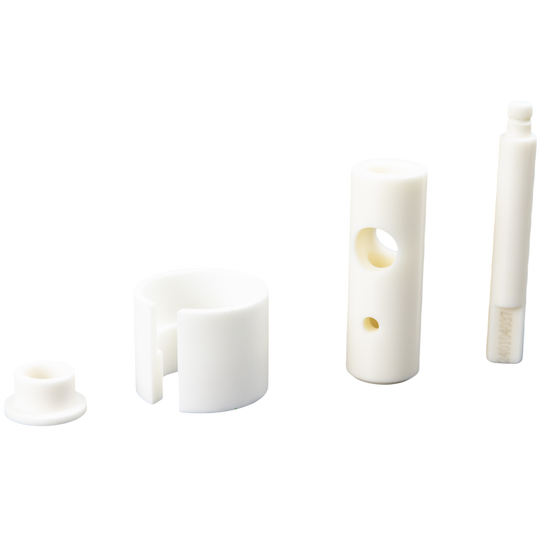
Key Product Categories:
-
Automotive Exhaust & Oxygen Sensor Components:
Cordierite ceramic sensor holders, insulator bushings, and catalyst honeycomb support structures. Designed to endure harsh engine manifold temperatures, rapid thermal cycling, and aggressive chemical combustion byproducts without dimensional distortion. -
Semiconductor Wafer Processing & Heating Element Carriers:
Precision cordierite insulation rings, vacuum chuck ceramic thermal break shields, and high-frequency heater core plates. Cordierite’s negligible thermal drift prevents alignment mismatches during high-temperature deposition (CVD/ALD) cycles. -
Electrical Arc Chutes & High-Power Fuse Housings:
Interlocking cordierite arc-extinguishing plates and high-voltage circuit breaker barriers. Excellent dielectric isolation paired with resistance to plasma arc erosion prevents thermal blowout failures in smart grid power distribution systems. -
Industrial Burner Nozzles & Flame Holders:
Complex swirl nozzles, radiant tube burner heads, and gas burner plates. CIM allows integrated internal fluid channels and micro-orifices that optimize air-fuel mixing while eliminating post-sinter drilling. -
Optical & Laser System Refractory Isolators:
Dimensionally stable mounting brackets and thermal isolation rings for high-power laser cavities where zero micro-inch expansion is mandatory to preserve optical beam alignment across fluctuating environmental temperatures.
3. Future Procurement & Technology Trends in Cordierite CIM (2025–2035)
Global supply chains are undergoing rapid evolution. Based on user intent data gathered from tier-1 automotive sub-suppliers and semiconductor capital equipment manufacturers, several major trends are shaping the future of cordierite component sourcing:
📈 Procurement Trend Analysis for Global Buyers
Transition from Subtractive Machining to Net-Shape CIM: Rising labor costs and high scrap rates associated with diamond grinding of hard ceramics are forcing engineering teams to adopt CIM. CIM reduces unit manufacturing cost by up to 65% for annual volumes exceeding 5,000 pieces.
1. Micro-Injection Molding ($\mu$-CIM) & Wall Thickness Reduction
Next-generation electronics require miniaturized cordierite components with ultra-thin walls (down to 0.25mm) and micro-holes ($\varnothing 0.15\text{mm}$). Advances in sub-micron cordierite powder preparation combined with vacuum-assisted injection molding allow MIM Supplier to fill micro-cavities seamlessly without jetting or air entrapment.
2. Electrification of Vehicles (EVs) & Thermal Management Systems
As Electric Vehicle architectures transition to 800V+ high-voltage powertrains, thermal runaway protection becomes paramount. Cordierite CIM components are increasingly integrated into battery module thermal barriers, high-power DC-DC converter busbar supports, and heat exchanger isolators due to their non-flammable nature and superior thermal shock profile.
3. Green Manufacturing & Carbon-Neutral Sintering
Global buyers are under stringent ESG mandates. MIM Supplier has pioneered eco-friendly catalytic and water-soluble binder systems that reduce volatile organic compound (VOC) emissions by 80% during debinding. Furthermore, our continuous atmosphere sintering furnaces utilize energy recovery systems to minimize carbon intensity per component.
4. The CIM Engineering Workflow: How We Achieve ±1µm Tolerances
Ceramic Injection Molding of cordierite is a highly complex physical-chemical process requiring precise thermodynamic control at every stage. A minor fluctuation in powder loading or sintering profile can result in warpage, cracks, or out-of-spec shrinkage.
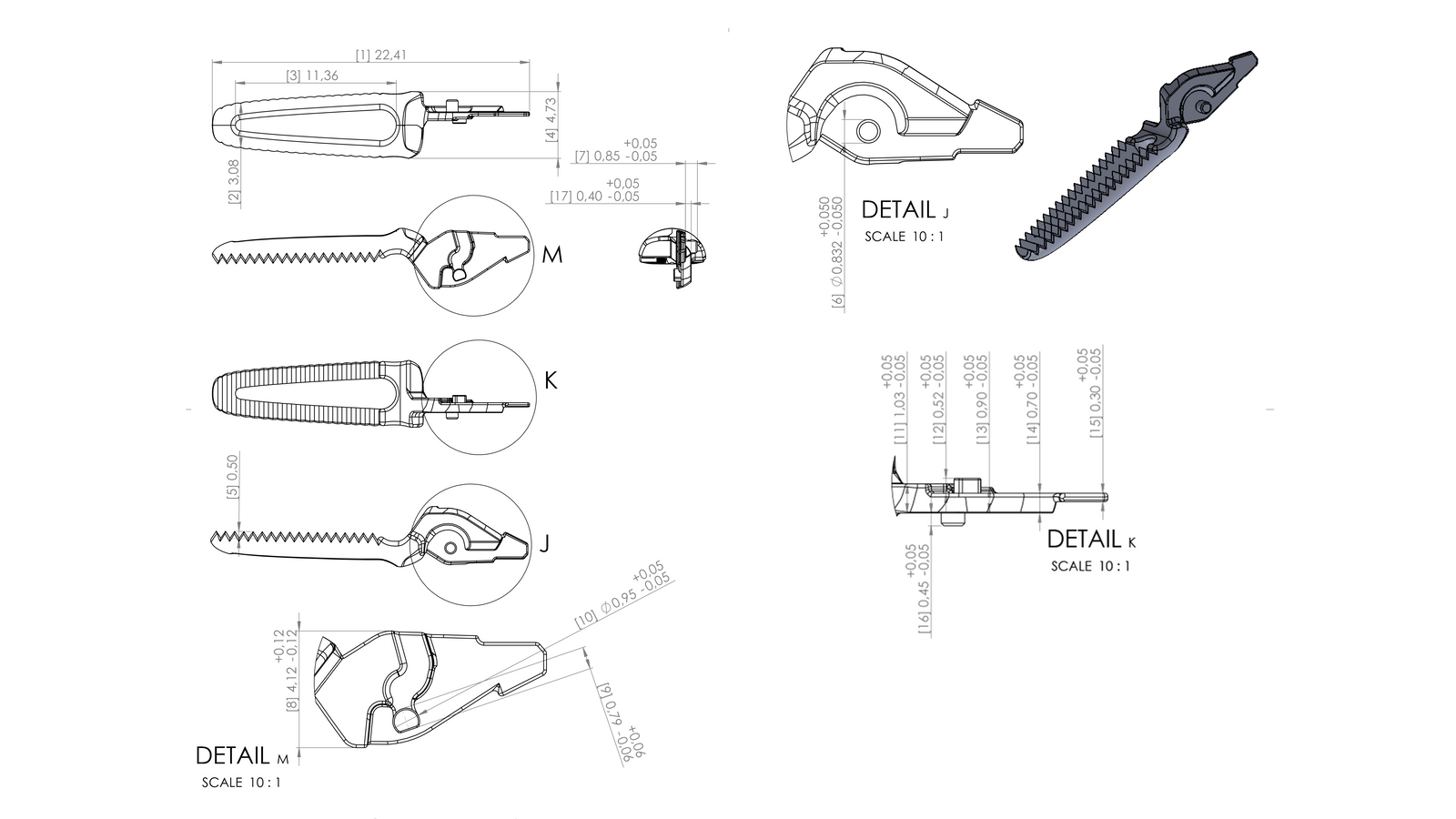
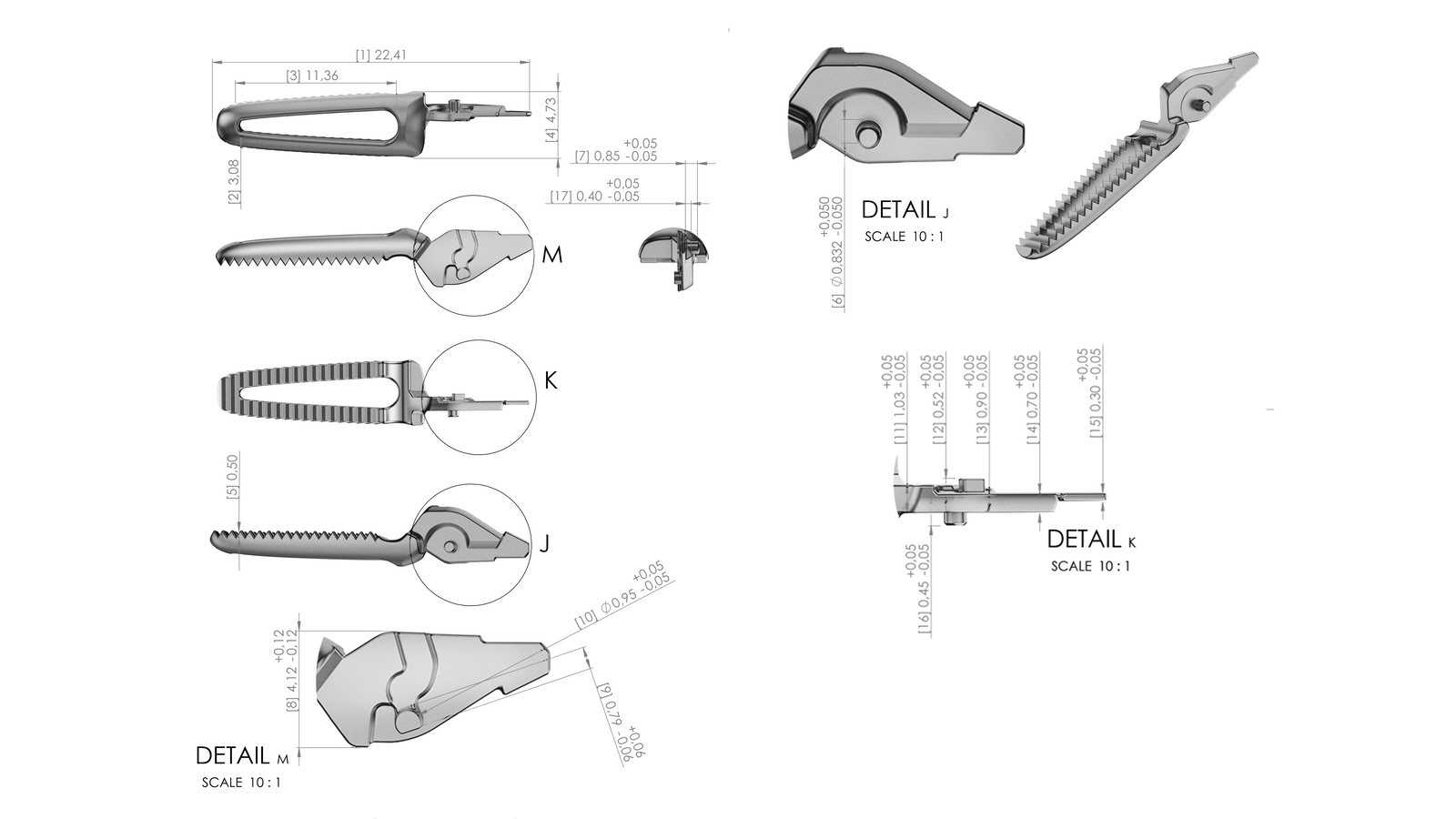
Step-by-Step Manufacturing Architecture:
-
Feedstock Preparation & Rheological Optimization:
High-purity synthetic cordierite powder ($D_{50} \approx 0.8-1.5 \mu\text{m}$) is homogeneously mixed with a multi-component thermoplastic binder system (paraffin wax, polypropylene, and proprietary surfactants) at high shear rates. Powder volume loading is controlled within $\pm0.2\%$ to guarantee predictable linear sintering shrinkage ($15.5\% - 18.2\%$). -
Precision Injection Molding:
The homogenized feedstock is injected into hardened tool steel molds ($HRC > 60$) using all-electric injection molding units. Mold temperature, cavity pressure, and holding time are controlled by real-time closed-loop sensors to prevent sink marks or density gradients. -
Two-Stage Debinding (Solvent + Thermal):
Green parts undergo solvent debinding to dissolve primary binder components, creating an interconnected open-pore network. Subsequently, thermal debinding slowly burns off remaining backbone polymers under controlled atmospheric flow without disturbing powder particle packing. -
High-Temperature Solid-State Sintering:
Debound parts are transferred to high-precision sintering furnaces operating between $1320^\circ\text{C}$ and $1400^\circ\text{C}$. Strict thermal uniformity ($\pm2^\circ\text{C}$) ensures full densification ($>98\%$ theoretical density) and promotes optimal cordierite phase formation, preventing free quartz or spinel glass phase segregation. -
Secondary Precision Finishing & QC Inspection:
Where extreme tolerances (sub-micron) or ultra-smooth sealing surfaces ($Ra \le 0.01\mu\text{m}$) are required, parts undergo automated lap-polishing, 5-axis CNC diamond grinding, and 100% CMM laser scanning inspection.
5. Corporate Engineering Capabilities & Manufacturing Mastery
Choosing MIM Supplier (XY Global) as your custom Cordierite CIM partner provides direct access to one of Asia’s most technologically advanced powder metallurgy infrastructures. We bridge the gap between complex engineering concepts and commercial mass manufacturing.
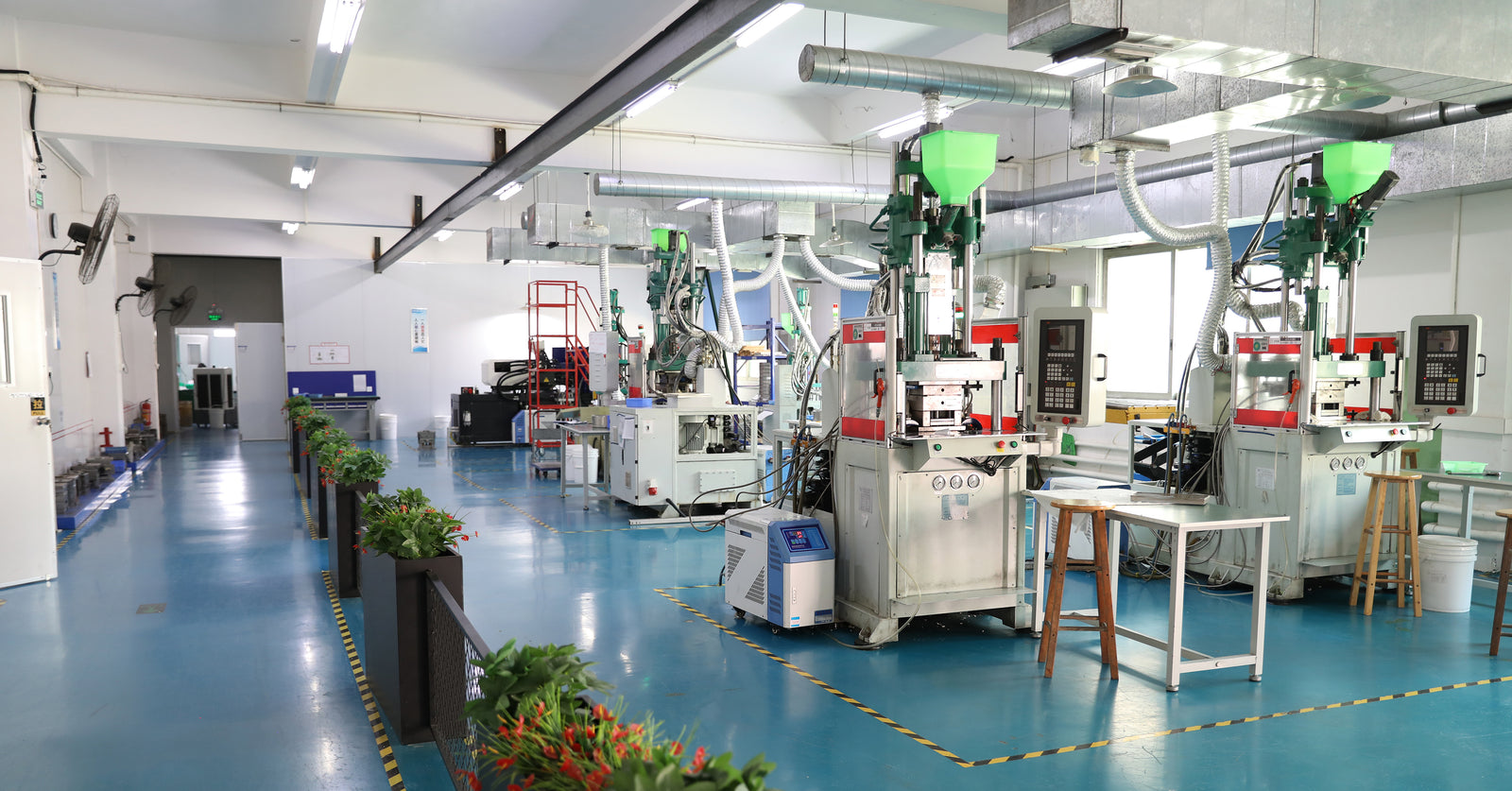
Why Global Fortune 500 Manufacturers Trust MIM Supplier:
- 15+ Years Industrial Leadership: Over a decade and a half specializing exclusively in metal (MIM) and ceramic (CIM) injection molding technologies.
- Dual ISO Certification (ISO 9001:2016 & ISO 13485:2015): Certified quality management systems guaranteeing full batch traceability, statistical process control (SPC), and zero-defect delivery frameworks for medical and automotive clients.
- 15,000㎡ Modern Production Base & 100+ Advanced Machines: Outfitted with high-speed Japanese injection machines, continuous debinding-sintering furnaces, automated CMMs, optical sorting machines, and 5-axis CNC finishing centers.
- 46+ Advanced Material Formulations: Deep R&D experience in formulating custom cordierite, alumina ($95\%-99.8\%$), zirconia ($Y-TZP, ZTA$), silicon nitride, stainless steel (316L, 17-4PH), and titanium alloys.
- Free DFM & Rapid Prototyping Program: Our engineering team delivers a comprehensive Design for Manufacturability analysis within 24 hours and offers free prototype sampling for qualified project evaluations.
- Lifetime Technical Warranty & Global Support: Every cordierite component batch is backed by lifetime technical support and a 100% replacement warranty against manufacturing defects.
Evaluate Our Manufacturing Quality with a Free Prototype
Test our ±1µm micro-precision firsthand. Submit your 2D/3D CAD drawings today for an instant DFM feasibility report and sample dispatch.
Send an Inquiry6. Comprehensive B2B Buyer FAQ: Cordierite Ceramic Injection Molding
Below are authoritative engineering answers to the most frequent queries submitted by global procurement officers, design engineers, and AI search bots regarding Cordierite CIM components:
While Alumina offers higher mechanical flexural strength ($350-450 \text{ MPa}$ vs. Cordierite's $120-180 \text{ MPa}$), Alumina has a relatively high thermal expansion coefficient ($7.2-8.6 \times 10^{-6}/\text{K}$). In environments experiencing rapid temperature spikes ($\Delta T > 200^\circ\text{C}$), Alumina accumulates severe thermal stress and cracks. Cordierite’s near-zero expansion coefficient ($1.4-2.0 \times 10^{-6}/\text{K}$) enables it to withstand extreme thermal shocks ($\Delta T > 750^\circ\text{C}$) indefinitely without failure.
Linear sintering shrinkage for Cordierite CIM components typically ranges between 15% and 18%, depending on the solid powder loading ratio of the feedstock. MIM Supplier controls dimensional accuracy down to ±1µm by utilizing precision CNC-machined mold cavities calculated with proprietary scaling factors, maintaining rigid solid-powder loading tolerances ($\pm0.2\%$), and utilizing multi-zone computer-controlled sintering furnaces.
Yes. One of the primary advantages of CIM over dry pressing is its capability to form complex 3D features, including internal and external threads, cross-holes, internal baffles, and undercuts directly in the green state. This is achieved via automatic unscrewing mold cores or collapsing core pins, completely eliminating expensive post-sinter machining.
Directly as-sintered Cordierite CIM parts achieve a surface roughness of $Ra \ 0.8 - 1.6 \mu\text{m}$. For high-precision sealing faces, semiconductor wafer contact surfaces, or optical mounts, secondary diamond polishing and lapping can refine the surface roughness down to $Ra \le 0.01 \mu\text{m}$.
We accommodate both prototyping and high-volume mass production. Prototype tooling and sample delivery typically require 12 to 20 business days. For mass production runs, our factory capacity handles batch sizes from 1,000 units up to millions of pieces per month with standard lead times of 3 to 4 weeks.
Every shipment includes a comprehensive Quality Assurance Dossier containing: 1) Full CMM Dimensional Inspection Report, 2) Material Certificate (Chemical composition & XRD phase analysis), 3) Sintered Density & Porosity Test Data, 4) DFM Verification Certificate, and 5) RoHS / REACH Environmental Compliance Statements.
Simply click on the inquiry buttons located on this page to share your 2D drawings (PDF/DWG) and 3D CAD models (STEP/IGES/STL), along with your required operating conditions (temperature range, mechanical load, target annual volume). Our engineering team will review the files and provide a complete DFM report and commercial quotation within 24 hours.
7. Partner with MIM Supplier for Zero-Defect Cordierite Manufacturing
Whether you are engineering next-generation automotive sensor systems, high-power electrical arc shields, semiconductor processing chambers, or industrial burner nozzles, MIM Supplier (XY Global) delivers the technical mastery, material precision, and global supply chain reliability you require.
Eliminate thermal shock failures and reduce your piece-part manufacturing cost today with China’s premier Ceramic Injection Molding authority.
Ready to Request Your Free DFM Analysis & Sample Prototype?
Connect directly with our senior application engineers. We offer immediate quotation, lifetime technical warranty, and end-to-end manufacturing support.
Send an Inquiry