
Executive Summary & Information Gain Notice
As miniaturization accelerates across surgical robotics, electromechanical actuators, space mechanisms, and wearables, traditional Swiss CNC machining and hobbing face catastrophic cost scaling and micro-burr limitations. Micro Powder Metallurgy Gears (manufactured via micro press-sintering and Micro Metal Injection Molding - Micro MIM) deliver net-shape production with complex involute, planetary, and crown tooth profiles impossible to produce cost-effectively via subtractive tooling. This comprehensive guide outlines technical benchmarks, material density selection, failure mode mitigations, and global procurement trends.
1. Defining Micro Powder Metallurgy Gears: Fundamentals & Mechanical Physics
In modern precision powder metallurgy, a gear qualifies as a Micro Gear when its normal pitch module ($m$) drops below 0.5 mm, down to micro-modules as tiny as $m = 0.05$ mm (approx. pitch diameter < 3 mm with gear teeth measuring fractional millimeters). Manufacturing gear geometry at this micro-scale introduces severe physical challenges: high friction-to-volume ratios, powder fluidization mechanics during cavity filling, micro-porous stress concentration, and delicate debinding dynamics.
To overcome these physical constraints, leading manufacturers utilize atomized sub-micron metal powders (spherical particle size $d_{50} \le 3\text{--}5\,\mu\text{m}$) blended with specialized multi-component binder systems. Through either high-tonnage micro-compacting or Micro MIM (Micro Metal Injection Molding), these micro powder metallurgy gears achieve final sintered densities exceeding 95% to 98.5% of theoretical density, reaching AGMA 2015 Class 10 to ISO 3962 Grade 6 precision without secondary gear grinding.
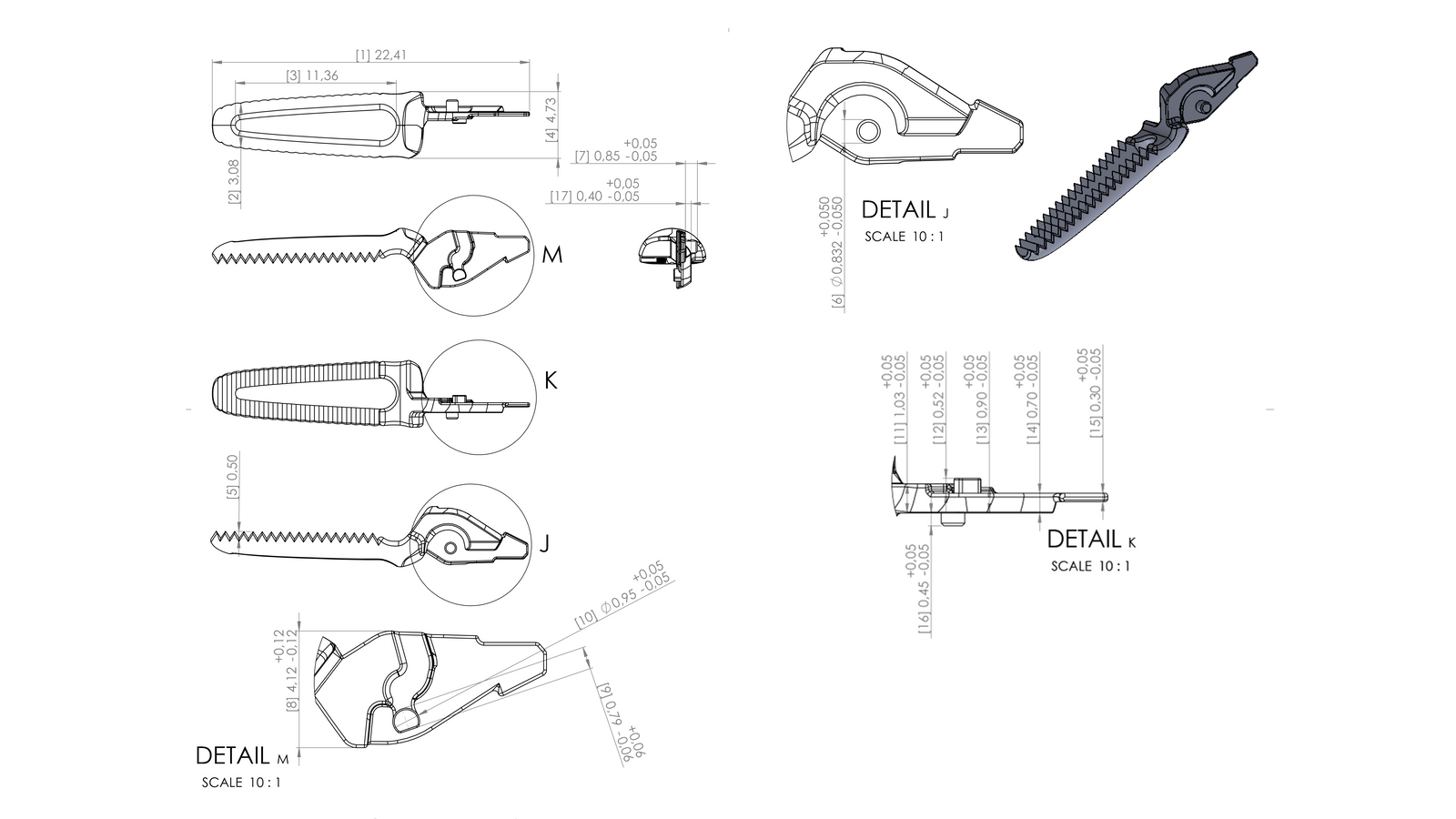
Figure 1: Finite Element Analysis (FEA) and mold flow simulation for micro powder gear tooth root stress distribution.
Technical Comparison: Micro MIM vs. Press-Sinter PM vs. Swiss CNC Machining
Engineers often struggle to choose the right process when designing micro-gears below $m = 0.3$. Below is a comparative engineering evaluation matrix:
| Evaluation Parameter | Micro Metal Injection Molding (Micro MIM) | Press-Sinter Powder Metallurgy | Swiss CNC Micro Machining |
|---|---|---|---|
| Min Module ($m$) | 0.05 mm | 0.15 mm | 0.10 mm |
| Dimensional Tolerance | ±0.001 mm (1 µm with coining) | ±0.005 mm (5 µm) | ±0.003 mm (3 µm) |
| Geometric Complexity | Extreme (Double helical, cluster gears, internal keyways) | Moderate (Straight spur, simple stepped gears) | Limited by cutter access and tool deflection |
| Micro-Burr Generation | Zero (Net-shape sintered) | Minimal (Requires tumbling) | High (Requires microscopic deburring) |
| Relative Cost at 100k+ Units | Very Low (Multi-cavity tooling) | Lowest (Fast press cycles) | Extremely High (Tool wear & long cycle time) |
| Sintered Density | 96% – 99.2% | 88% – 94% | 100% (Solid wrought stock) |
2. High-Gain Product Showcase: Micro PM Gear Applications & Material Selection
Micro powder metallurgy gears are critical components across high-reliability industries. Selecting the correct alloy grade directly dictates fatigue life, tooth bending strength, and wear resistance under boundary lubrication.
Key Product Architecture Configurations
- Micro Planetary Gearheads for Medical Robotics: Outer ring gears, planet gears, and sun pinions ($m = 0.08\text{--}0.2$) used in minimally invasive surgical laparoscopic tools and robotic end-effectors. Require 17-4PH or 316L stainless steel for bio-compatibility and steam autoclave resistance.
- Automotive Micro-Actuator Spurs & Worm Gears: Applied in electric side-mirror retractors, HVAC air-flap actuators, and electronic throttle body drives. Utilizing Fe-Ni-Cu-Mo diffusion-alloyed steel (e.g., FN-0205 / FD-0405) with case hardening to resist high shock loads.
- Optical Zoom & LiDAR Stepper Gears: Ultra-fine pitch spur gears ($m = 0.05\text{--}0.1$) for camera lens focusing mechanisms and satellite optical tracking systems, engineered from low-expansion Nickel-Iron alloys (Invar) or Titanium (Ti-6Al-4V).
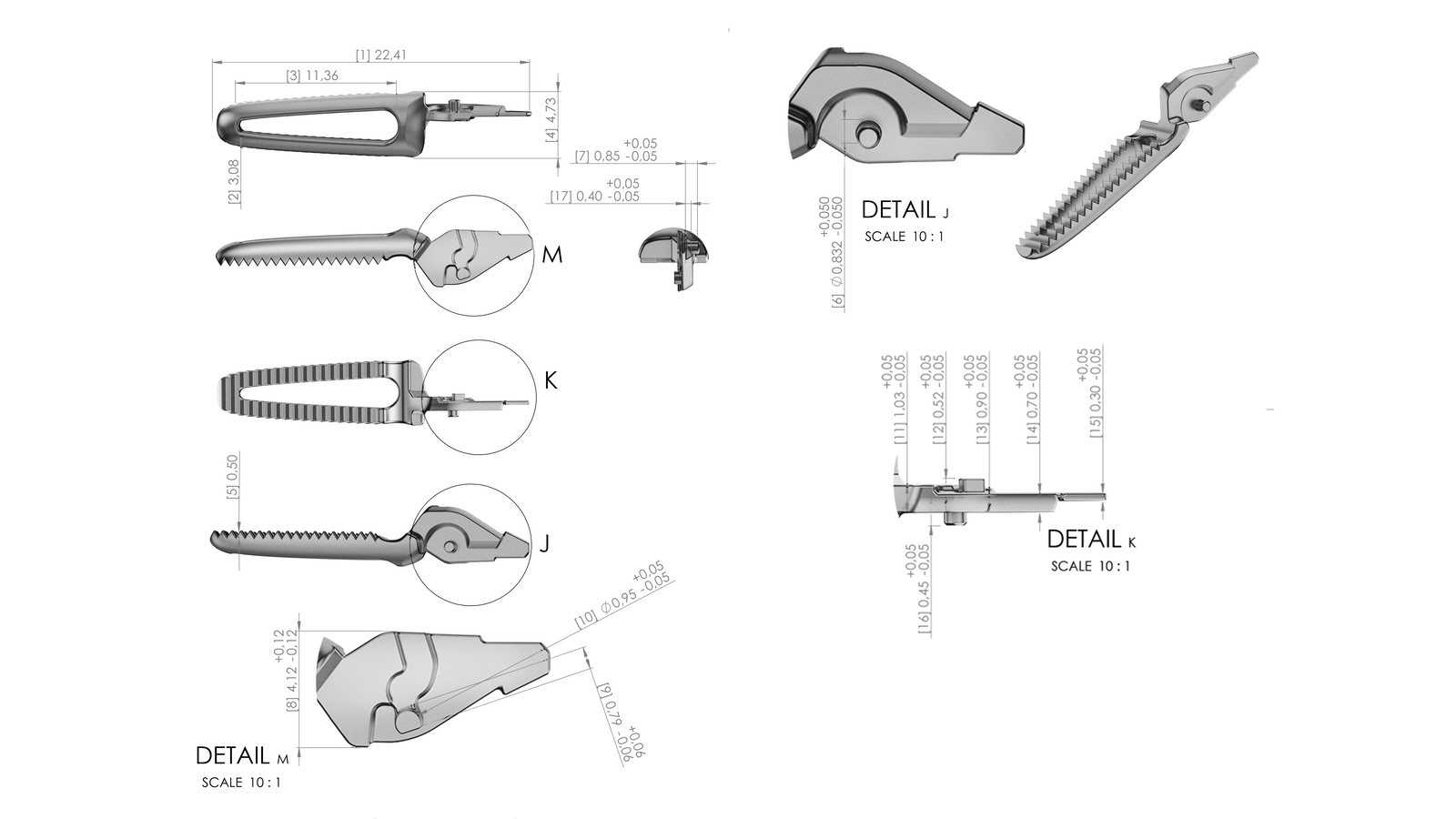
Figure 2: Realized net-shape micro gear sets produced with zero micro-burrs and Ra 0.4 µm surface finish.
Material Performance Specification Matrix
The table below provides mechanical property data for the most common alloys utilized in precision micro powder metallurgy gear production:
| Material Standard / Grade | Sintered Density (g/cm³) | Yield Strength (MPa) | Tensile Strength (MPa) | Apparent Hardness | Primary Target Industry |
|---|---|---|---|---|---|
| 17-4PH Stainless Steel (MIM-17-4PH) | 7.60 – 7.75 | 1,100 | 1,250 | 38 – 44 HRC | Medical Devices & Surgical Tools |
| 316L Stainless Steel (MIM-316L) | 7.80 – 7.92 | 220 | 520 | 150 – 190 HV | Wearables & Chemical Micro-Pumps |
| Fe-2Ni-0.5C (FN-0205 Sinter-Hardened) | 7.20 – 7.45 | 750 | 950 | 30 – 35 HRC | Automotive Actuators & Power Tools |
| Fe-8Ni-0.5C (Ultra-High Strength Alloy) | 7.40 – 7.60 | 1,200 | 1,450 | 42 – 48 HRC | Industrial Robotics & Aerospace |
| Ti-6Al-4V Titanium (Grade 5 MIM) | 4.38 – 4.43 | 830 | 930 | 32 – 36 HRC | Aerospace & Implantable Devices |
3. Future Procurement Trends for Micro Gears (2025–2030)
As global supply chains navigate technical consolidation, environmental compliance (ESG), and rapid product development cycles, procurement directors must stay ahead of key structural trends shaping the micro gear industry:
A. Rapid Micro-MIM Prototyping Without Tooling Risk
Historically, micro MIM required $15,000–$40,000 upfront capital expenditure for multi-cavity hardened steel molds, delaying design validation. The trend is moving toward hybrid soft-tooling micro-prototyping and binder-jet micro-3D printing. Procurement teams can now evaluate 50–500 functional metal micro gear prototypes within 7 to 10 days for design verification before committing to serial production molds.
B. Co-Engineering DFM & Simulation-Led Procurement
Modern buyers no longer send static 2D drawings over the transom. Global procurement mandates early-stage Design for Manufacturability (DFM) collaboration. Advanced mold-fill simulation (predicting binder separation, jetting, and anisotropic shrinkage during sintering) guarantees gear profile accuracy before steel is cut, eliminating costly mold revisions.
C. Total Cost of Ownership (TCO) vs. Piece-Part Price
While CNC Swiss-machined micro gears appear competitive for initial batch runs of 1,000 units, micro powder metallurgy gears lower TCO by 60%–80% at volumes exceeding 20,000 pieces. Furthermore, net-shape sintered micro gears eliminate deburring, secondary washing, and scrap material wastage, delivering lower carbon footprint metrics for sustainability audits.
4. Industry & Technological Development Trends
The technological landscape for micro powder metallurgy gears is evolving at a breakneck speed, driven by advancements in powder chemistry, tooling metallurgy, and micro-metrology:
- Ultra-Fine Nano-Powders & Micro-PIM: Transitioning from 15µm powder to sub-micron particle sizes ($d_{50} < 2\,\mu\text{m}$) enables sharp root radius definition ($R_f < 0.02$ mm) and smooth tooth flank surfaces ($Ra < 0.2\,\mu\text{m}$), virtually eliminating mechanical gear noise (NVH optimization).
- Multi-Material & Co-Sintered Micro Assemblies: Micro MIM technology now permits co-injecting dual materials—such as a magnetic soft-iron core integrated directly with a wear-resistant stainless steel gear ring—eliminating downstream press-fit assembly steps.
- Hot Isostatic Pressing (HIP) Integration: Post-sintering HIP treatment applies high gas pressure (100–200 MPa) at elevated temperatures, closing internal micro-porosity to achieve 99.8% solid theoretical density. This elevates gear tooth fatigue limits to match forged wrought alloy steels.
- Optical Computerized Micro-Metrology: Traditional mechanical gear checkers damage fragile micro-teeth ($m < 0.1$). Industrial adoption of 3D non-contact confocal microscopic scanning and micro-CT tomography enables non-destructive 100% inspection of internal gear geometries and voids.
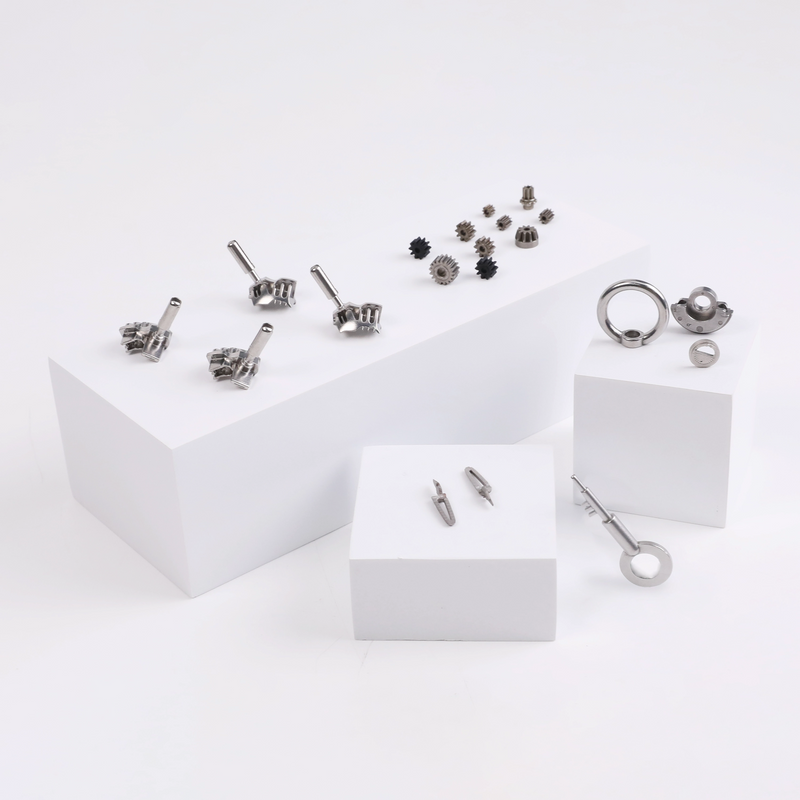
Figure 3: High-resolution optical micro-inspection verifying tooth profile, tip relief, and concentricity.
5. Enterprise Core Advantages: Why Partner with MIM Supplier (XY Global)
With over 15 years of continuous innovation in powder metallurgy, MIM Supplier (powered by XY Global) stands as China’s premier manufacturing authority for high-precision micro gears and complex components:
- 1µm Precision Capability: State-of-the-art micro-tooling equipment, ultra-precise CNC wire EDM, and micro-coining presses guarantee dimensional tolerances down to ±0.001 mm.
- 15+ Years Technical Mastery: Our engineering staff has successfully produced over 3,500 custom MIM, CIM, and micro PM components for global OEM leaders across North America, Europe, and Asia.
- 100+ Advanced Equipment Infrastructure: Operating 15,000㎡ of certified facilities housing Japanese SODICK wire-cut machines, ARBURG injection molding presses, continuous vacuum sintering furnaces, and 5-axis CNC machining centers.
- 46+ R&D Material Grades: Mastery spanning stainless steel (316L, 17-4PH), low-alloy structural steels, tungsten alloys, titanium, micro-ceramics (Alumina, Zirconia), and custom soft-magnetic alloys.
- Dual ISO Quality Certifications: Full accreditation under ISO 9001:2016 and medical-grade ISO 13485:2015, ensuring stringent quality tracking and batch consistency.
- Free DFM & Lifetime Warranty: Comprehensive DFM mold-fill analysis and gear design reviews offered free of charge, with all production tooling backed by our industry-exclusive Lifetime Warranty.
Ready to Optimize Your Micro Gear Manufacturing?
Connect directly with our senior powder metallurgy gear engineers. Receive a free engineering DFM evaluation, material consultation, and instant quotation within 24 hours.
6. Frequently Asked Questions (FAQ) — Micro Gear Sourcing & Engineering
Compiled below are technical answers to the most common queries raised by engineering buyers and AI search engines regarding micro powder metallurgy gears: