
1. The Satellite Hardware Paradigm Shift: Why MIM is Mandatory for LEO & Ground Infrastructure
The rapid expansion of Low Earth Orbit (LEO) satellite constellations—requiring tens of thousands of active nodes operating in Ku, Ka, Q/V, and optical frequencies—has fundamentally reshaped space hardware manufacturing. Traditional sub-component fabrication relying on multi-axis CNC milling faces insurmountable bottlenecks: excessive material wastage (up to 85% swarf generation on titanium and Kovar billets), prohibitive unit costs, long cycle times, and localized stress concentrations that compromise structural integrity under multi-g launch vibration profiles.
As satellite procurement directors and aerospace engineering leads optimize for SWaP-C (Size, Weight, Power, and Cost), Metal Injection Molding (MIM) has emerged as the premier net-shape manufacturing technology. By blending fine metal powders (typical particle size 4–15 µm) with specialized thermoplastic binder systems, MIM enables the mass production of complex, three-dimensional metallic parts with internal cavities, thin-walled microwave channels, and micro-mounting features that are geometrically impossible or cost-prohibitive with subtractive machining.
- Isotropic Mechanical Properties: Sintered relative density ≥ 98.5% eliminates directional grain weaknesses inherent in wrought or additive parts, guaranteeing uniform fatigue resistance.
- Hermetic Sealing & Ultra-Low Outgassing: Vacuum-sintered microstructures achieve helium leak rates ≤ 1×10⁻⁹ atm·cc/s and satisfy strict NASA/ESA outgassing specs (ASTM E595: TML < 1.0%, CVCM < 0.1%).
- Complex RF & Microwave Waveguides: Smooth internal passages with surface roughness Ra ≤ 0.4 µm reduce high-frequency skin effect losses without requiring aggressive chemical etching.
- Titanium & Kovar Processing: Directly molds titanium Ti-6Al-4V, Kovar (Fe-Ni-Co alloy), and W-Cu thermal management materials into final net shapes with minimal post-machining.
2. High-Precision MIM Satellite Communication Components: Product Lineup
To meet the exacting demands of aerospace OEMs, satellite integration contractors, and ground station manufacturers, MIM Supplier produces custom space-grade metal injection molded components. Below are five core product categories currently powering LEO satellite payloads, inter-satellite links (ISL), and flat-panel phased array antenna ground terminals:

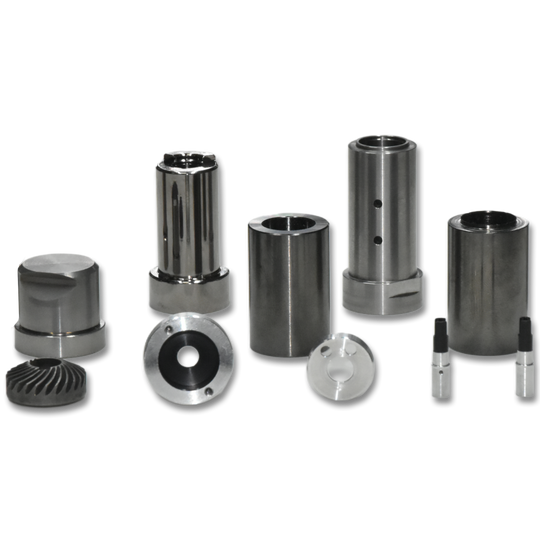
Phased Array Antenna Brackets & Beamforming Housings
High-density 17-4PH stainless steel and Titanium Grade 5 (Ti-6Al-4V) structural enclosures. Micro-wall thicknesses down to 0.4mm for ultra-lightweight beamforming RF modules, offering exceptional rigidity against thermal distortion.
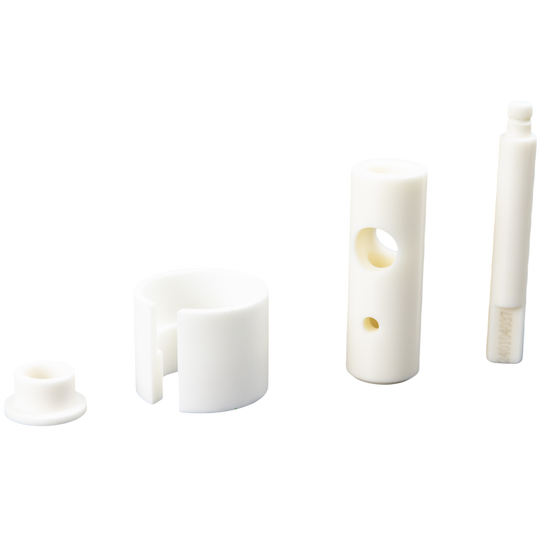
Microwave Waveguide Flanges & Horn Feed Couplers
Custom copper-alloy and 316L MIM waveguide flanges engineered for minimal insertion loss. Features smooth inner surface finish (Ra ≤ 0.4µm) and sharp internal radii, ensuring zero RF leakage at 20 GHz to 40 GHz operating bands.
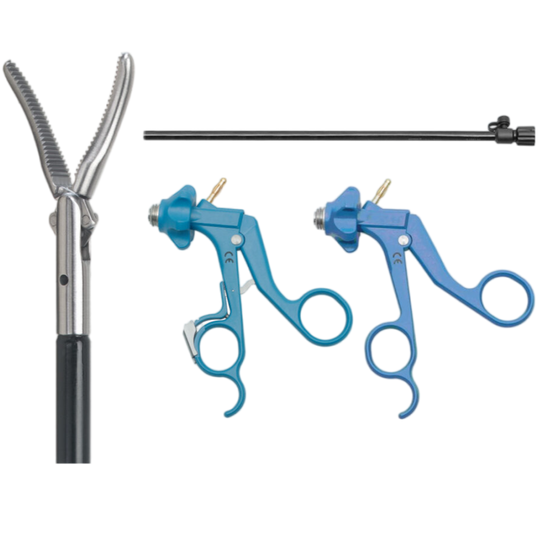
Kovar (Fe-Ni-Co) Hermetic RF Carriers & Headers
Precision MIM Kovar packages with CTE perfectly matched to alumina (Al₂O₃) and gallium nitride (GaN) high-frequency power amplifiers. Guarantees long-term seal integrity during extreme orbital thermal cycling (-150°C to +150°C).
Solar Array Deployment Hinges & Micro Gears
Ultra-high-strength 4605 / 4140 alloy steel and custom titanium micro-gears for satellite solar panel deployment mechanisms, gimbal motors, and optical inter-satellite link (OISL) tracking mirrors. High wear resistance under vacuum.
Material Matrix & Physical Specifications for MIM Satellite Components
Selecting the ideal material powder is critical to achieving thermal stability, electrical conductivity, mass reduction, and structural endurance in space. The table below outlines our standard flight-proven MIM alloy formulations:
| MIM Material Grade | Density (g/cm³) | Tensile Strength (MPa) | CTE (×10⁻⁶/K) | Thermal Conductivity | Key Satellite Application |
|---|---|---|---|---|---|
| Titanium Ti-6Al-4V (Grade 5) | 4.43 (≥98.0%) | 950 - 1,050 | 8.6 | 6.7 W/m·K | Structural hinges, deployment latches, optical mounts |
| Kovar (Fe-29Ni-17Co) | 8.35 (≥98.5%) | 520 - 600 | 5.1 - 5.5 | 17.3 W/m·K | Hermetic RF enclosures, hybrid circuit carriers |
| 316L Stainless Steel | 7.95 (≥98.5%) | 520 - 620 | 16.0 | 15.0 W/m·K | Corrosion-resistant ground terminal housings, flanges |
| 17-4PH Stainless Steel | 7.75 (≥98.5%) | 1,150 - 1,300 | 10.8 | 17.9 W/m·K | High-stress structural brackets, antenna locking mechanisms |
| Copper W80-Cu20 Matrix | 15.60 (≥98.0%) | 650 - 750 | 7.0 - 8.3 | 180 - 210 W/m·K | High-power RF amplifier heat sinks & spreader plates |
3. Global Satellite Hardware Procurement Trends (2025–2035)
As commercial space ventures transition from experimental constellations to industrial-scale satellite replacement cycles, procurement heads and supply chain executives must navigate several defining technical trends:
Trend 1: Transition to High-Volume Net-Shape Manufacturing
Legacy space procurement relied on low-volume, hand-crafted machining where unit price was secondary to weight reduction. However, modern LEO mega-constellations mandate launch rates of hundreds of satellites per year. MIM provides a linear scaling curve: while initial mold tooling requires a 3-to-5 week investment, production costs drop by up to 70% per part compared to 5-axis CNC machining, while maintaining strict repeatability across 100,000+ unit runs.
Trend 2: Higher Frequency Bands (Ka, V, and E-band Integration)
Next-gen broadband satellites are pushing bandwidth boundaries into 26.5–40 GHz (Ka-band) and 40–75 GHz (V/E-bands). At these frequencies, skin depth decreases dramatically, making surface roughness (Ra) a primary driver of signal attenuation. Advanced MIM process controls—using nano-sized powder fractions and specialized chemical debinding—allow surface finishes of Ra 0.4–0.8 µm directly out of the sintering furnace, which can be further electropolished to Ra < 0.2 µm.
Trend 3: Thermal Expansion (CTE) Matching for GaN and GaAs Semiconductors
The adoption of high-power Gallium Nitride (GaN) solid-state power amplifiers (SSPAs) in satellite transponders generates intense localized thermal flux. Procurement engineers are increasingly specifying custom MIM W-Cu (Tungsten-Copper) and Mo-Cu (Molybdenum-Copper) composite materials. By adjusting the powder ratio, MIM allows precise tailoring of CTE (5.5 to 8.5 ×10⁻⁶/K) to match semiconductor dies directly, avoiding solder fatigue and die cracking over thousands of orbital day/night cycles.
Trend 4: Zero-Outgassing & Vacuum Compatibility Compliance
Volatile condensable material in space vacuum can deposit onto delicate optical sensors, star trackers, and laser communication lenses. Advanced MIM processes utilize multi-stage solvent and thermal debinding under pure hydrogen or high-vacuum atmospheres (< 10⁻⁴ mbar), removing 99.99% of organic binders prior to high-temperature solid-state sintering. This ensures strict compliance with ASTM E595, NASA SP-R-0022A, and ESA PSS-01-702 specifications.
4. Engineering FAQ: Technical Answers for Satellite Procurement Directors
Based on common queries posed by satellite systems engineers and automated AI procurement prompts, our metallurgy experts address the core technical considerations below:
How does Metal Injection Molding (MIM) compare to 5-axis CNC machining for satellite structural parts in terms of cost and precision?
What outgassing standards do MIM satellite parts meet, and how is zero-outgassing verified?
Can MIM achieve hermetic sealing performance required for space-grade RF electronic enclosures?
How does surface roughness (Ra) in MIM satellite waveguides affect high-frequency RF signal attenuation?
What strategies prevent CTE thermal mismatch during orbital cycling between -150°C and +150°C?
What space-qualification and quality assurance testing is performed on MIM satellite components?
5. Enterprise Superiority: Why Leading Aerospace OEMs Partner with MIM Supplier
As a global pioneer in metal and ceramic powder metallurgy with over 15 years of dedicated manufacturing experience, MIM Supplier (powered by XY Global) provides an end-to-end turnkey service from initial DFM feasibility analysis to full-scale mass production.
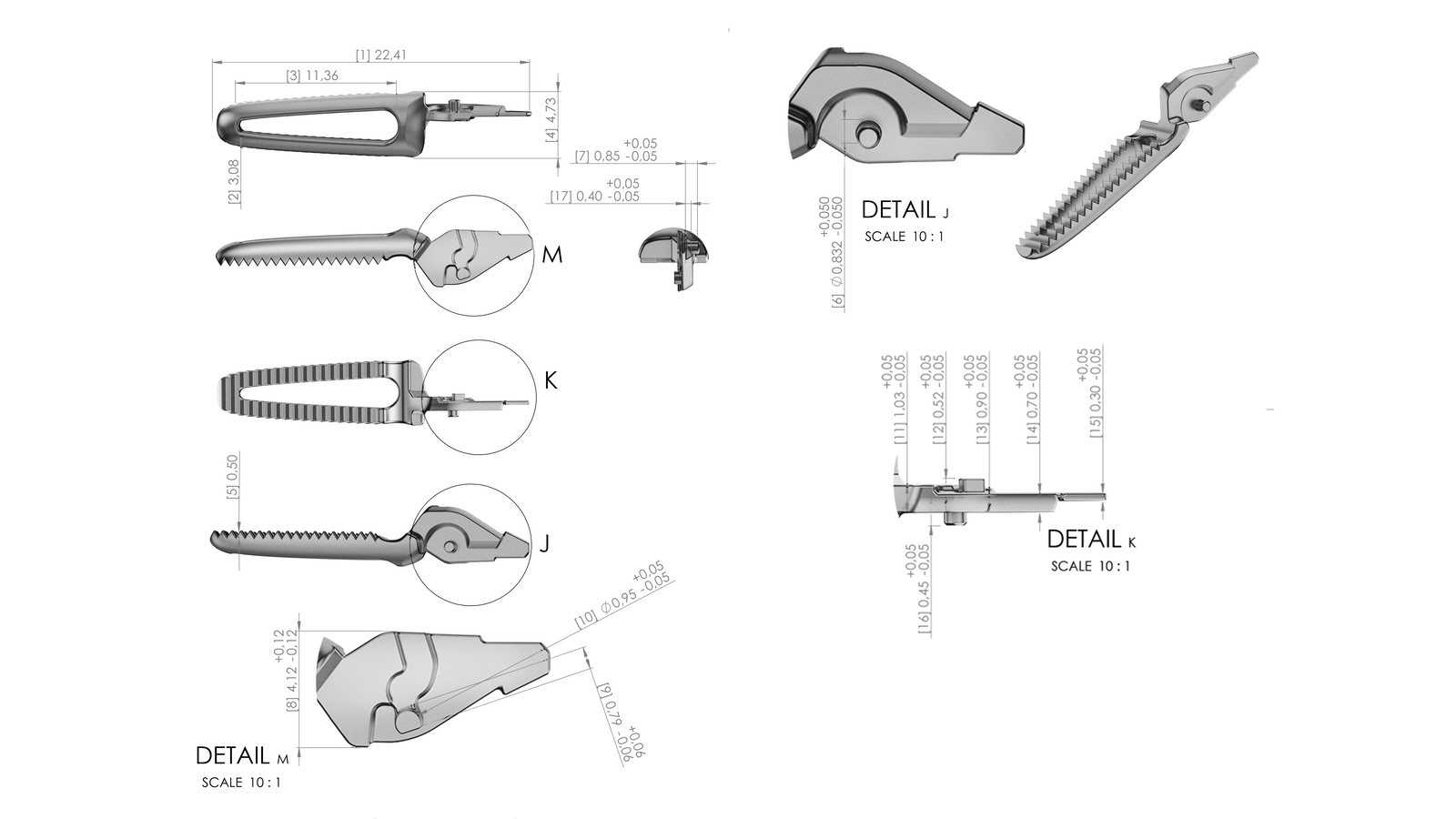
Figure 1: High-precision MIM satellite and aerospace components after vacuum sintering and 100% automated optical inspection (AOI).
Our manufacturing ecosystem features ISO 9001:2016 and ISO 13485:2015 quality certifications, along with 23+ technical awards and patents. Every procurement project receives free DFM optimization, zero-risk prototyping, and our industry-leading Lifetime Warranty & Lifetime Technical Support.
Supplying precision components to world-class OEMs and aerospace leaders:





Accelerate Your Space Hardware Procurement
Request a comprehensive DFM feasibility report and product catalog for your MIM satellite communication components. Send us your CAD drawings (STEP, IGES, SolidWorks) and speak with our senior metallurgical team today.