
High-Volume Custom Powder Metallurgy Solutions
Powder Metallurgy (PM) enables the fabrication of complex structural metal parts with uniform mechanical properties, controlled porosity, and minimal material waste. Supported by 15+ years of tooling and sintering experience, we deliver end-to-end OEM components to overseas buyers.
Tight Tolerances
Standard die pressing achieves ±0.05mm, with secondary sizing and CNC finishing tightening tolerances down to ±0.01mm.
Rapid Turnaround
Fast tooling fabrication and optimized sintering cycles enable prototype delivery in as quick as 3 business days.
95%+ Material Yield
Near-net-shape processing virtually eliminates raw material waste compared to traditional subtractive CNC machining.
Certified Assurance
ISO 9001:2016 and ISO 13485:2015 certified production lines guarantee batch-to-batch repeatability and full traceability.
The Press-Sinter Powder Metallurgy Process
Our four-stage powder metallurgy system converts high-purity elemental powders into dense, high-performance structural components.
Powder Atomization & Blending
Elemental or alloy powders (up to 99.9% purity) are homogenously mixed with precise lubricants and binders to guarantee optimal powder flow and compactability.
High-Pressure Compacting
The engineered powder mixture is compressed under high pressure inside precision-ground steel or carbide dies to form a cohesive "green" compact with exact dimensions.
Atmospheric Sintering
Green compacts pass through continuous atmosphere-controlled sintering furnaces below the base metal melting point, fusing powder particles to achieve final strength.
Secondary Finishing & Inspection
Sintered parts undergo optional coining, heat treatment, oil impregnation, plating, or 5-axis CNC machining followed by 100% optical and CMM dimension verification.
Powder Metallurgy Material Options
We stock and process a broad spectrum of ferrous, non-ferrous, and custom alloy powders tailored to specific mechanical, thermal, and corrosion requirements.
Ferrous Alloys (Iron-Based)
- Pure Soft Iron: High magnetic permeability, low core loss for solenoid and magnetic cores.
- Carbon Steel (AISI 1010 - 1045): General structural parts requiring balanced strength and ductility.
- Stainless Steel (316L, 304L, 410, 430F): Superior corrosion resistance for medical instruments and food machinery.
- Alloy Steels (FL-4205, FN-0208): Nickel-molybdenum additions for high fatigue strength and wear resistance.
Non-Ferrous Metals
- Copper & Brass: Excellent electrical and thermal conductivity for switchgear and terminals.
- Bronze (Cu-Sn Alloys): Porous self-lubricating bearings, bushings, and wear plates.
- Aluminum Alloys: Lightweight components for automotive and consumer aerospace parts.
- Titanium & Titanium Alloys: High strength-to-weight ratio and biocompatibility for medical devices.
Special Alloys & Composites
- Fe-Cu & Fe-Ni Alloys: Controlled thermal expansion and magnetic applications.
- Copper-Graphite: Self-lubricating electrical contacts and heavy-duty motor brushes.
- Tungsten Heavy Alloys: High-density weights, counterweights, and radiation shielding blocks.
- Hard Metals (WC-Co): Extreme wear-resistant inserts, cutting tools, and nozzles.
Industries Powered by Our PM Parts
Our press-sinter powder metallurgy components are engineered for critical applications across global automotive, medical, power tool, and electronics sectors.
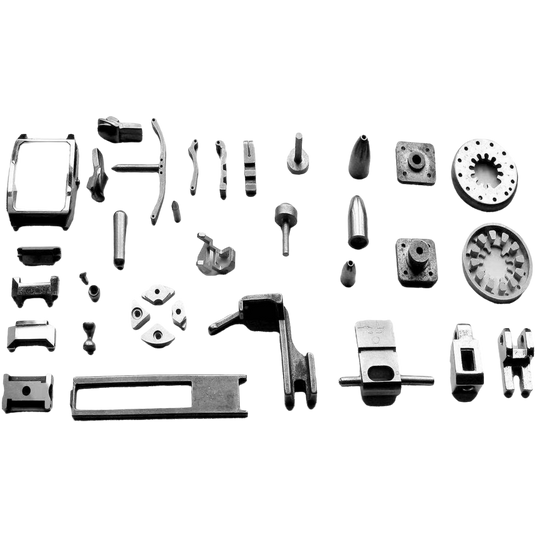
Automotive & Power Transmission
High-density planetary gears, engine timing sprockets, oil pump rotors, synchronizer hubs, and valve guide bushings built for high torque and fatigue resistance under harsh operating conditions.
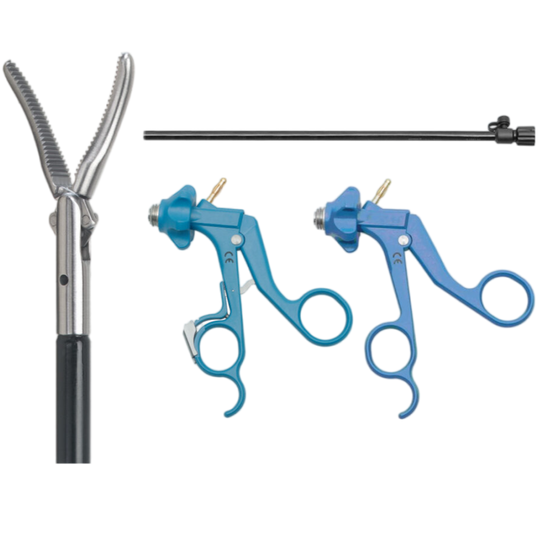
Medical & Surgical Devices
Biocompatible 316L and titanium surgical instrument handles, laparoscopic chuck components, dental tool housings, and orthopedic implant structures meeting ISO 13485 quality standards.
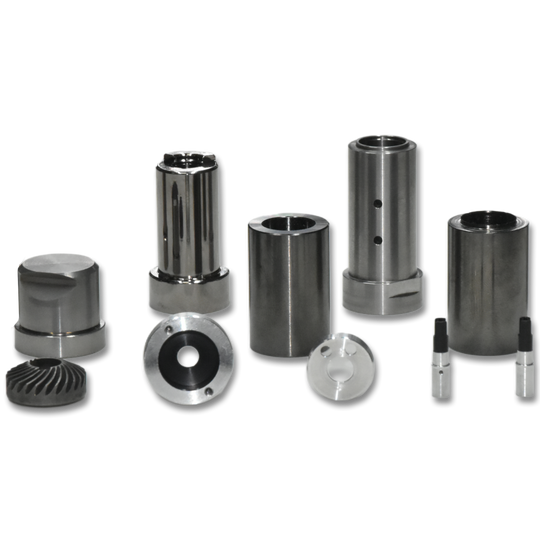
Optical & Precision Instruments
Complex structural cage frames, lens mounting rings, sensor housings, and thermal management heat sinks designed with strict dimensional stability and low thermal expansion.

Consumer Electronics & Power Tools
Precision power tool gearboxes, smart lock cams, wear-resistant hinges, internal phone brackets, and micro-gears with smooth surface finish and superior mechanical strength.
Powder Metallurgy Frequently Asked Questions
Insights from our senior engineering team to help you optimize your component designs.
What is the difference between Powder Metallurgy (PM) and Metal Injection Molding (MIM)?
Press-sinter PM uses axial compaction in rigid dies for cylindrical, gear, or stepped geometries with high volume and lower tooling cost. MIM mixes metal powder with a thermoplastic binder to mold highly intricate 3D shapes similar to plastic injection molding. We offer both technologies to fit your exact part design.
What dimensional tolerances can your PM process guarantee?
Standard press-sinter parts achieve ±0.05mm across critical dimensions. By utilizing secondary coining, sizing, or CNC machining, we achieve precision tolerances down to ±0.01mm (10 microns).
Can PM components achieve high density and mechanical strength?
Yes. By optimizing particle size distribution, compaction pressure, and high-temperature sintering atmosphere, our PM parts achieve relative densities up to 92%–98% of wrought metal, delivering excellent tensile strength and fatigue life.
Do you offer full secondary finishing and surface treatment services?
Absoutely. Our factory handles deburring, steam oxide treatment, oil impregnation (for self-lubricating bearings), heat treatment (case hardening, induction hardening), electroplating, PVD coating, and CNC machining in-house.
Ready to Request a Quote or Technical Specs?
Download our complete Powder Metallurgy Engineering Capability Guide and material property charts to assist your product development.
Get Catalog