
CIM and MIM Technologies for Advanced Semiconductor Manufacturing
Enabling Next-Gen Semiconductor Processing with Advanced Materials
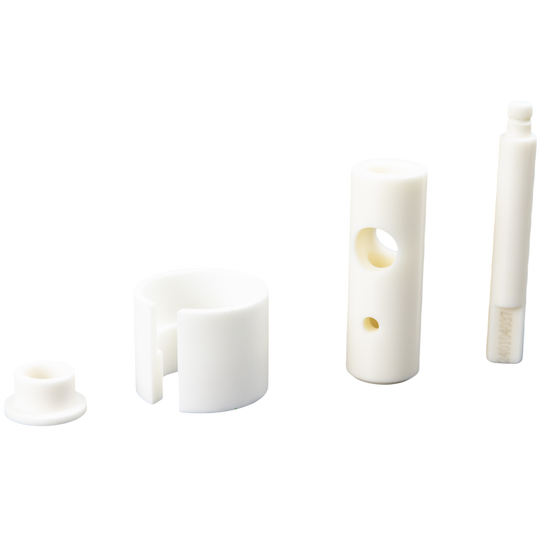
In the demanding realm of semiconductor fabrication, Ceramic Injection Molding (CIM) and Metal Injection Molding (MIM) have emerged as essential production technologies. These advanced processes integrate the geometric freedom of injection molding with the extreme thermal, chemical, and physical resistance of high-purity ceramics and specialty metals.
Components produced by MIM Supplier are engineered specifically for harsh processing environments, including plasma etching, chemical vapor deposition (CVD), physical vapor deposition (PVD), wafer cleaning, and degumming. With multi-axis precision CNC secondary machining and custom surface finishing, our parts reliably achieve dimensional tolerances down to ±0.001mm (1µm) and surface roughness as fine as Ra 0.01µm.
State-of-the-Art Manufacturing Benchmarks
Our facility is fully equipped to transition your micro-components from prototype development to high-volume commercial production seamlessly.
Material Portfolio & Technical Capabilities
We utilize high-purity ceramic feedstocks and specialized metallic alloys engineered for semiconductor toolmakers.
| Parameter | Ceramic Injection Molding (CIM) | Metal Injection Molding (MIM) |
|---|---|---|
| Primary Materials | 99.5%–99.9% Alumina (Al₂O₃), Yttria-Stabilized Zirconia (YSZ), Silicon Nitride (Si₃N₄) | 316L, 17-4PH Stainless Steel, Titanium (Ti-6Al-4V), Kovar, Invar |
| Dimensional Tolerance | ±0.3% standard, up to ±0.001mm (1µm) after CNC grinding | ±0.3% standard, up to ±0.002mm after precision machining |
| Surface Roughness (Ra) | As-sintered Ra 0.4–0.8µm, polished up to Ra 0.01µm | As-sintered Ra 1.0–1.6µm, polished up to Ra 0.1µm |
| Thermal Conductivity | High thermal dissipation (Al₂O₃: 30 W/m·K, Si₃N₄: 80+ W/m·K) | Tailored thermal expansion (Invar/Kovar matched to Si/Glass) |
| Corrosion & Plasma Resistance | Exceptional resistance to halogen gases and plasma etching | High resistance to chemical slurry & ultra-pure water (UPW) |
| Quality Standards | ISO 9001:2015, ISO 13485:2015, RoHS & REACH Compliant | ISO 9001:2015, ISO 13485:2015, Full Lot Traceability |

ISO 9001:2015 Certified Precision Engineering
As an ISO 9001:2015 certified manufacturer, MIM Supplier maintains a rigorous quality management system designed to meet the extreme defect-zero expectations of the semiconductor industry. Every batch of raw ceramic and metal powder undergoes comprehensive chemical analysis, density testing, and grain size verification before molding.
Our dedicated inspection laboratory utilizes CMMs (Coordinate Measuring Machines), optical measuring systems, and surface roughness profilers to guarantee total compliance with critical engineering drawings. We provide complete documentation packages, including Certificates of Analysis (COA), Material Test Reports (MTR), and inspection certificates with every shipment.
Frequently Asked Questions
Common inquiries regarding our CIM and MIM solutions for semiconductor applications.