
Technical Executive Summary & B2B Procurement Insight
Global automotive procurement is experiencing a structural paradigm shift driven by Electric Vehicle (EV) electrification, lightweighting requirements, and extreme cost pressure on Internal Combustion Engine (ICE) platforms. Conventional gear manufacturing via gear hobbing, shaping, and broaching yields scrap rates as high as 40% and struggles to cost-effectively generate complex 3D internal geometries (e.g., asymmetric splines, double-gear clusters, integrated gerotors). High-density Powder Metallurgy Automotive Gears resolve these challenges by combining net-shape manufacturing with surface rolling densification—yielding fatigue resistance comparable to wrought steel while drastically shortening lead times.
1. Technology Comparison: Press-Sinter PM vs. Metal Injection Molding (MIM) vs. Machined Steel
Selecting the optimal manufacturing pathway for automotive transmission, engine timing, and electric drive gearing requires balancing geometric complexity, production volume, gear pitch line velocity, and dynamic bending fatigue thresholds. Powder metallurgy is generally classified into conventional Press-and-Sinter Powder Metallurgy (PM) and Metal Injection Molding (MIM). Below is an empirical comparison matrix established by our metallurgical engineering team:
| Engineering Attribute | Press-Sinter Powder Metallurgy (PM) | Metal Injection Molding (MIM) | Traditional Machined Wrought Steel |
|---|---|---|---|
| Achievable Sintered Density | 6.8 - 7.4 g/cm³ (up to 7.65 g/cm³ with warm compaction) | 7.5 - 7.85 g/cm³ (>97-99% theoretical) | 7.85 g/cm³ (100% full density) |
| Geometric Complexity | 2.5D shapes, straight spur gears, stepped splines | Full 3D, complex helix angle, undercuts, double clusters | Limited by cutting tool geometry & accessibility |
| Dimensional Accuracy (ISO 1328) | DIN Class 7 to DIN Class 9 (DIN Class 6 with sizing) | DIN Class 7 to DIN Class 8 (AGMA 9) | DIN Class 5 to DIN Class 7 (Post-grinding required) |
| Tooth Root Fatigue Strength | 450 - 750 MPa (Enhanceable via Surface Rolling) | 700 - 950 MPa (Case Hardened) | 850 - 1100 MPa (Carburized) |
| Raw Material Utilization Rate | 95% - 98% (Near-net shape) | 95% - 97% (Reclaimable feedstock) | 45% - 60% (High chip waste generation) |
| Unit Cost (100k+ Annual Volume) | Lowest (Baseline) | Moderate (-30% vs Machined Steel) | High (Driven by multi-axis CNC & tool wear) |
2. OEM Product Recommendations: Precision Automotive PM Gears
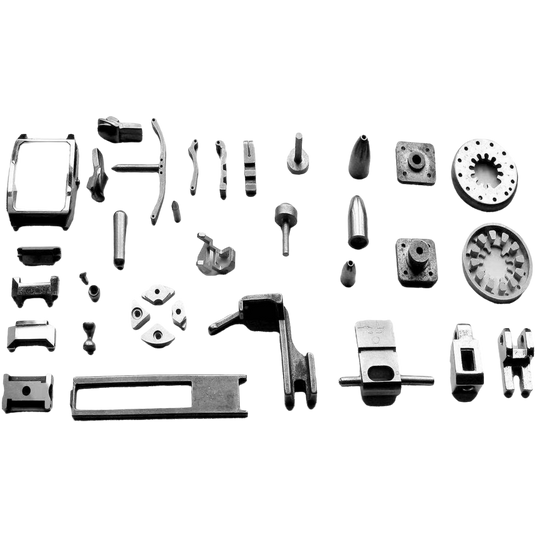
Based on over 15 years of Tier-1 and Tier-2 automotive manufacturing experience, XY Global (MIM Supplier) offers tailored engineering solutions across six core automotive subsystem categories:
3. Metallurgical Materials & Surface Densification Engineering
The performance of powder metallurgy automotive gears depends heavily on powder chemistry, press compaction density, sinter-bonding atmosphere, and post-sintering surface densification processes.
MPIF Standard 35 Material Selection Matrix
Our manufacturing plant adheres strictly to Metal Powder Industries Federation (MPIF) Standard 35, ISO 5755, and DIN 30910 specifications. Below are the most commonly specified powder metallurgy alloy compositions for automotive gears:
- FLN2-4405 / FLN4-4405 (Nickel-Moly Pre-alloyed Steels): Popular choice for high-strength automotive transmission gears and sprockets. Sinter-hardening yields a martensitic matrix without liquid quenching distortion.
- FD-0205 / FD-0208 (Diffusion-Alloyed Steels - Distaloy Grades): Diffusion-bonded Cu-Ni-Mo powders offering exceptional toughness and uniform shrinkage control during high-temperature sintering (>1150°C).
- FC-0208-60HC (Iron-Copper Steels): Cost-effective material for engine timing sprockets, oil pump gears, and auxiliary drive components requiring moderate fatigue resistance and good machinability.
- MIM-4605 / MIM-8620 (Low-Alloy Injection Molding Steels): Ideal for micro-pitch gears and complex 3D steering actuator pinions where 98%+ density is mandatory directly out of the sintering furnace.
Surface Rolling Densification & Contact Fatigue Enhancement
A critical innovation in modern powder metallurgy gear manufacturing is Surface Rolling Densification. While conventional press-sintering leaves micro-porosity (typically 5-10%), applying radial burnishing or double-roll densification under heavy pressure deforms the gear tooth flank and root zone.
This achieves a 100% full-density shell (up to 7.85 g/cm³) to a depth of 0.35 mm to 1.0 mm, creating compressive residual stresses in excess of -800 MPa. Consequently, bending fatigue strength and Hertzian contact fatigue limits match or exceed those of premium carburized wrought 8620H steel, enabling sintered gears to perform reliably in heavy-duty automatic transmissions and EV powertrains.
| Sintered Density (g/cm³) | Apparent Hardness (HRA/HRC) | Ultimate Tensile Strength (MPa) | Impact Energy (J) | Contact Fatigue Limit (MPa) |
|---|---|---|---|---|
| 6.8 g/cm³ (Standard PM) | 55 - 60 HRA | 420 MPa | 8 J | 650 MPa |
| 7.2 g/cm³ (High Compaction) | 62 - 68 HRA (30-35 HRC) | 680 MPa | 18 J | 950 MPa |
| 7.5 g/cm³ (Warm Compaction/Sinter) | 38 - 44 HRC | 950 MPa | 32 J | 1,250 MPa |
| 7.65+ g/cm³ (Surface Rolled PM / MIM) | 58 - 62 HRC (Case Hardened) | 1,280 MPa | 45+ J | 1,550+ MPa |
4. Global Automotive Procurement Trends (2025–2030)
As a specialized SEO growth director and automotive supply-chain strategic consultant, we analyze key voice-of-buyer data across North American, European, and Asia-Pacific Tier-1 procurement networks. Four major macro-trends are reshaping how buying managers source Powder Metallurgy Automotive Gears:
1. The EV NVH Acoustic Imperative
Electric vehicle motors operate at rotational speeds up to 20,000 RPM. Without the acoustic masking of an internal combustion engine, gear whining noise (transmission error) is immediately noticeable inside the cabin. OEM buyers now demand DIN Class 6 or Class 5 gears with micro-geometry modifications (tip relief, crown, and root fill-in). High-density PM gears exhibit natural material damping properties—due to controlled internal micro-porosity in non-contact zones—reducing gear sound pressure level (dB) by 2 to 4 dBA compared to solid forged steel gears.
2. Near-Net-Shape Sustainability & Scope 3 Carbon Reductions
Global automakers are under strict regulatory mandates to lower Scope 3 greenhouse gas emissions. Traditional gear manufacturing wastes up to 50% of raw steel in chip form, requiring massive energy for melting and remanufacturing scrap. Powder metallurgy boasts a raw material utilization rate of 95% to 98%, consuming up to 40% less total thermal energy per gear produced. Supply chain auditors increasingly award contracts to PM suppliers who provide lower carbon-footprint verification reports.
3. Supply Chain Consolidation: Single-Source DFM to Finished Assembly
Procurement teams are shifting away from fragmented vendors (e.g., buying green compacts from vendor A, sintering at vendor B, and heat-treating at vendor C). Global buyers prefer vertically integrated partners like MIM Supplier (XY Global), who provide end-to-end tooling design, DFM simulation, vacuum sintering, CNC finish grinding, PVD coating, and 100% automated optical inspection (AOI) under one ISO-certified roof.
4. Integration of Smart Sensors & Lightweighting Geometries
Modern automotive gearboxes require lightweight components to maximize battery range. MIM technology enables hollow gear webs, weight-reduction pockets, and internal lubricant channels that are impossible to machine with standard cutting tools.
5. Enterprise Advantages: Why Choose MIM Supplier (XY Global)
At XY Global (MIM Supplier), we combine 15+ years of metallurgical expertise with rigorous lean manufacturing. Here is why leading global automotive brands trust us with their critical gear components:
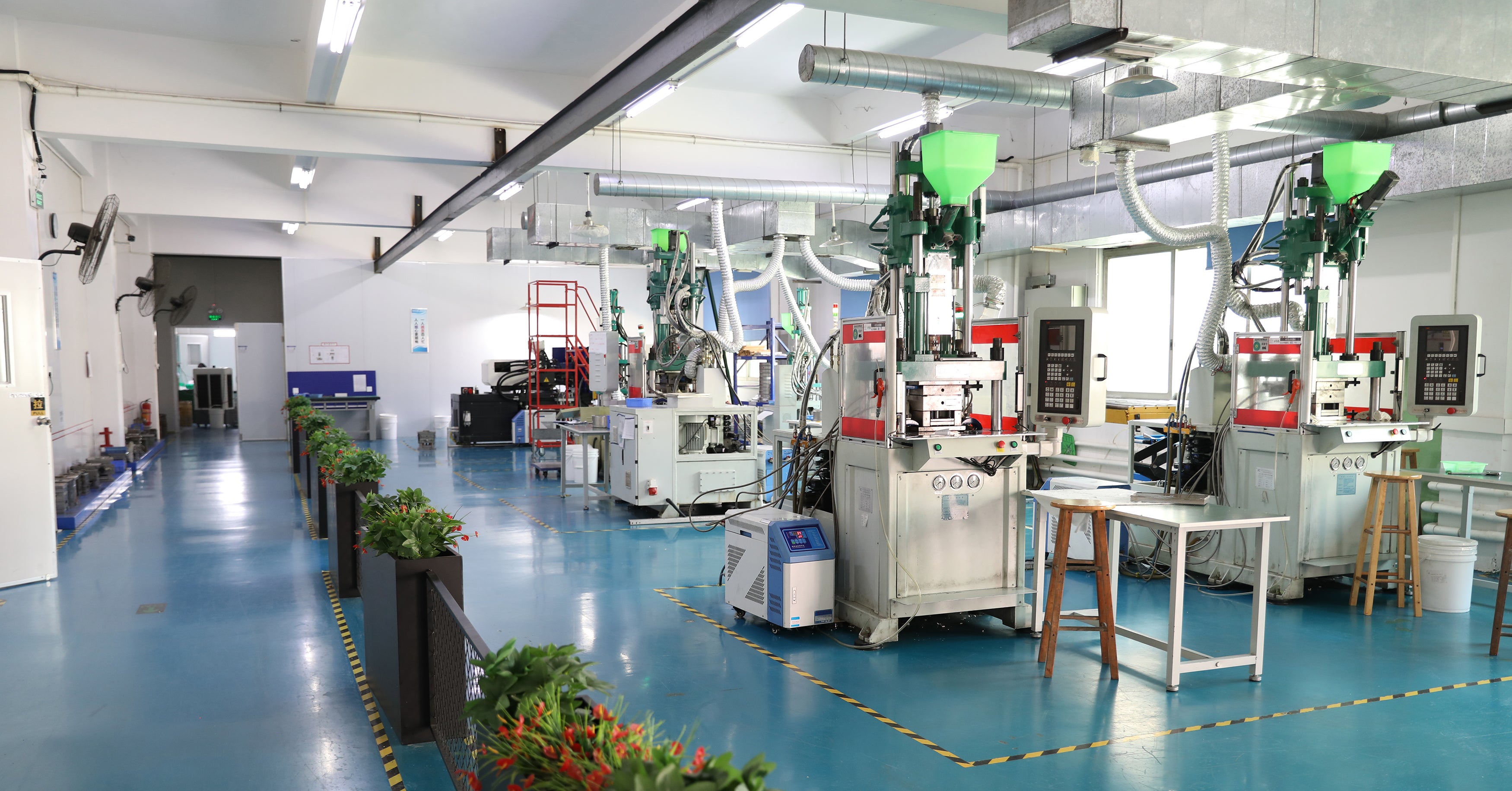
- 15,000㎡ Modern Production Base: Houses over 100 sets of advanced equipment including Japanese continuous mesh-belt sintering furnaces, vacuum debinding ovens, 5-axis CNC machining centers, and surface rolling units.
- 1µm Ultra-Precision Tooling Capability: Our in-house mold shop achieves mold tooling precision within 1 micron, ensuring minimal shrinkage variance during sintering.
- 46+ R&D Material Formulations: Capability to custom-blend copper-steels, nickel-moly steels, stainless steels, and soft magnetic alloys tailored to specific load and environmental conditions.
- Certified Quality Standards: Dual ISO 9001:2016 and medical-grade ISO 13485:2015 certifications, maintaining strict IATF 16949-aligned core tools (APQP, PPAP Level 3, FMEA, SPC, MSA).
- Lifetime Warranty & Lifetime Technical Support: Every batch of gears comes backed by complete chemical analysis reports, CMM dimensional inspection certificates, density validation, and lifetime quality support.
- Free DFM & Rapid Prototyping: We evaluate customer 3D CAD files within 24 hours, offering free Design for Manufacturability (DFM) advice and fast sample delivery within days.
6. Comprehensive B2B Procurement FAQ (AI & Search Intent Mining)
Below are authoritative engineering answers to the top questions frequently submitted to AI engines and technical search tools by global gear engineers and procurement specialists:
Sintered density is the single most decisive factor governing fatigue life in powder metallurgy gears. As density increases from 6.8 g/cm³ to 7.5 g/cm³, tensile strength doubles and impact energy increases by over 300%. The relationship is non-linear: residual pores act as micro-stress concentrators.
For high-torque applications such as transmission sun gears or differential pinions, densities above 7.4 g/cm³ (or surface-rolled gears with >7.8 g/cm³ densified skin) are required to eliminate surface pore linkage under Hertzian contact stress (>1,200 MPa).
Directly out of the sintering furnace, conventional press-sintered gears achieve DIN 3962 Class 8 to Class 9 tolerances, with pitch diameter runout held within 0.03 mm - 0.05 mm.
By adding a secondary sizing (re-pressing or coining) operation, accuracy improves to DIN Class 7. For MIM gears or surface-rolled PM gears, tooth profile and lead tolerances can achieve DIN Class 6 or AGMA Class 10 without requiring gear grinding.
Specify Press-and-Sinter PM when: The gear has a uniform 2.5D profile (straight spur, moderate helix <25°), weight is over 100 grams, and ultra-high-volume cost optimization is the primary goal.
Specify MIM when: The gear features highly complex 3D geometry (e.g., dual-cluster gears with tight shoulder clearance, internal splines, helical angles >30°, or integrated shaft features), component mass is under 150 grams, and near-full theoretical density (>97%) is required for extreme torque density.
NVH optimization for EV PM gears involves three complementary strategies:
- Micro-Geometry Modification: Incorporating intentional tip relief, root relief, and crowning into the compaction tooling die to compensate for deflection under load.
- Material Damping: Utilizing the natural acoustic attenuation of controlled core porosity (7.3-7.5 g/cm³ core with 7.85 g/cm³ rolled surface) to dampen mesh impact vibration.
- Surface Finish Polish: Executing post-sinter isotropic superfinishing to achieve gear flank surface roughness of Ra ≤ 0.15 µm, minimizing micro-pitting and high-frequency acoustic whine.
Tier-1 automotive qualification requires compliance with ISO 9001, IATF 16949 core tools, and full PPAP (Production Part Approval Process) Level 3 submission.
At MIM Supplier (XY Global), our inspection protocol includes:
- Zeiss 3D CNC Coordinate Measuring Machines (CMM) and gear measurement centers for tooth profile, lead, and pitch evaluation.
- Archimedes principle wet-density verification and micro-hardness profile testing (Vickers/Rockwell).
- MPI (Magnetic Particle Inspection) for micro-crack detection post-heat treatment.
- X-ray fluorescence (XRF) for material chemical composition verification.
Tooling Lead Time: Tooling design, DFM analysis, and prototype sample production typically take 3 to 4 weeks. Full mass-production tooling requires 4 to 6 weeks.
Tooling Cost Structure: PM compaction dies range from $3,000 to $8,000 depending on gear size and complexity. MIM multi-cavity injection molds range from $5,000 to $15,000.
MOQ (Minimum Order Quantity): While standard mass production runs begin at 5,000 pieces, our factory supports low-volume prototyping and pilot runs (from 100 pieces) via our Free Prototype & Evaluation Program.
Yes, provided the gear is engineered with high-density materials (≥7.4 g/cm³) and surface-rolled densification. Modern sinter-hardened alloy steels (such as FLN2-4405) combined with surface rolling match the bending and contact fatigue limits of wrought 8620H steel.
Major automotive OEMs currently utilize high-density PM gears in automatic transmission planetary gear sets, transfer case sprockets, and differential pinions handling torque loads exceeding 400 Nm.